Whole-university water consumption tracking
The measurement encompasses all USM campuses, facilities and operations, including academic and administrative buildings, research facilities, residential colleges and supporting services. USM measures the total volume of water used across the university, and water consumption is systematically recorded using institutional utility records, meter readings and monitoring records maintained by the relevant campus and facilities management units. USM’s water consumption measurement is therefore classified as a whole-university measurement, rather than a partial measurement.
The measurement covers water obtained from all applicable sources, including the municipal mains supply, treated or desalinated water, and extracted or recovered water from rainwater, stormwater, lake and groundwater systems. The consumption records from these sources are compiled and analysed to determine total institutional water use, assess consumption trends, identify water losses and support the implementation of water-efficiency measures.
Mains-supplied and treated water
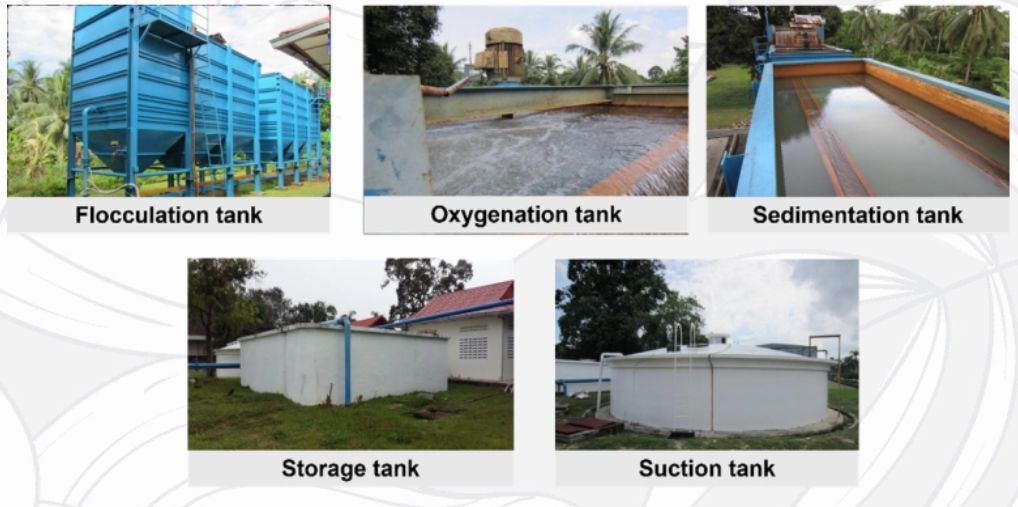
Mains-supplied water constitutes the principal water source for USM’s academic, residential, administrative and operational facilities. The volume consumed is measured through the University’s utility and metering records. USM also operates site-specific water treatment systems incorporating processes such as flocculation, oxygenation, sedimentation, storage, electrodialysis and reverse osmosis. The volume of water supplied or treated through these systems forms part of USM’s institutional water-management records.
Alternative on-campus water sources
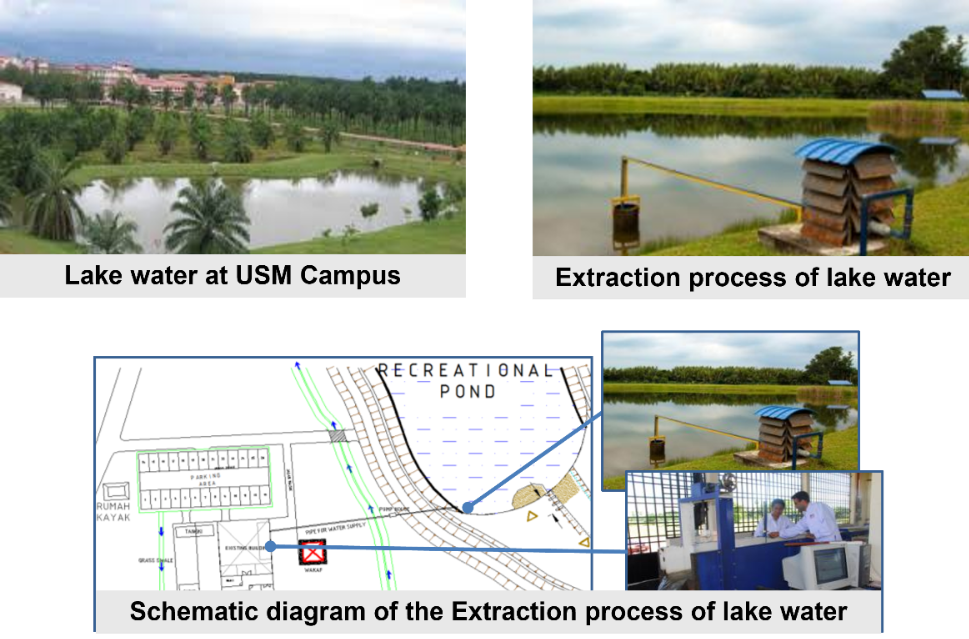
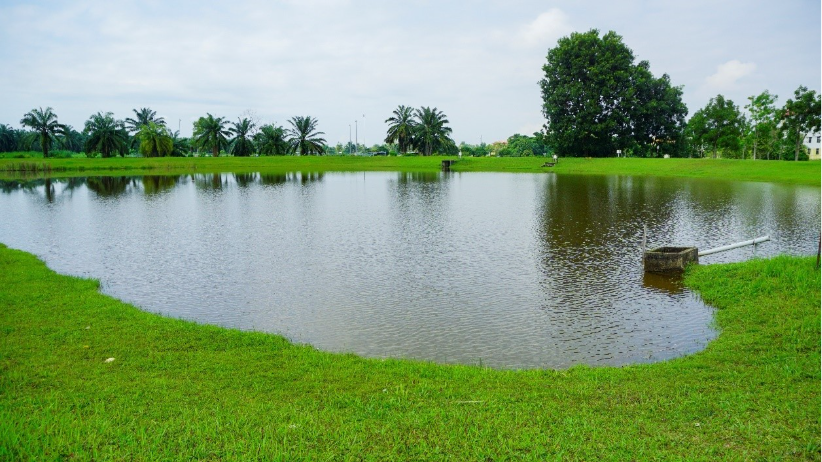
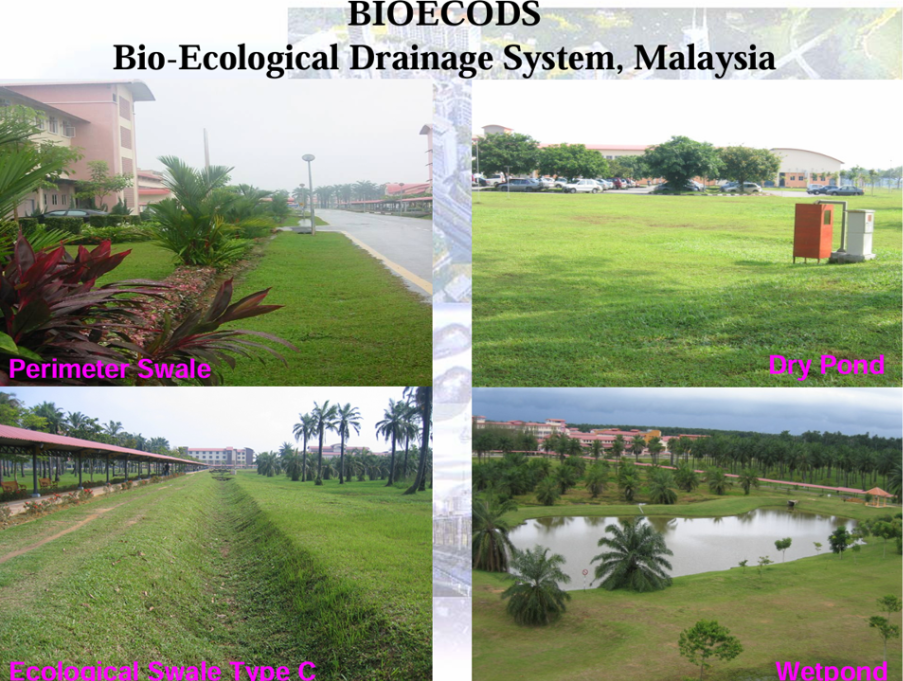
In addition to mains-supplied water, USM measures and manages water recovered from alternative on-campus sources. At the Tuanku Syed Sirajuddin Engineering Campus, stormwater is captured, treated and stored through the Bio-Ecological Drainage System (BIOECODS). The system comprises ecological swales, dry ponds, constructed wetlands, detention storage and interconnected ponds with a combined storage capacity of more than 30,000 m³. The recovered water is used for hydraulic research, laboratory testing, landscape irrigation, gardening and other non-potable campus operations.
BIOECODS information, River Engineering and Urban Drainage Research Centre (REDAC)
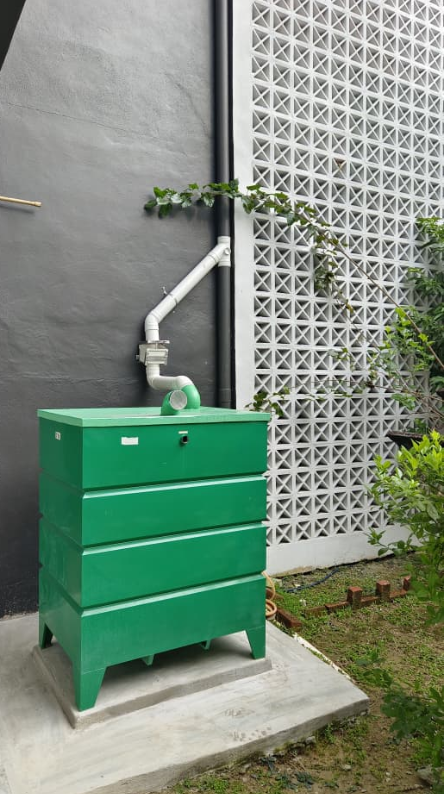
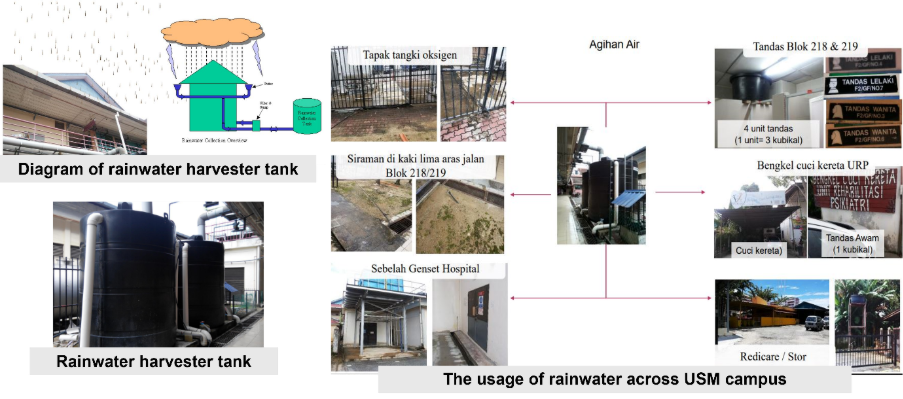
Rainwater harvesting is also implemented and monitored at selected USM facilities. At the School of Chemical Engineering, a repurposed 1,500-litre tank collects rainwater for landscape irrigation, general cleaning and other non-potable applications. Based on a daily use of approximately 50–100 litres, the system offsets an estimated 1,050–2,000 litres of treated municipal water each month during normal working days.
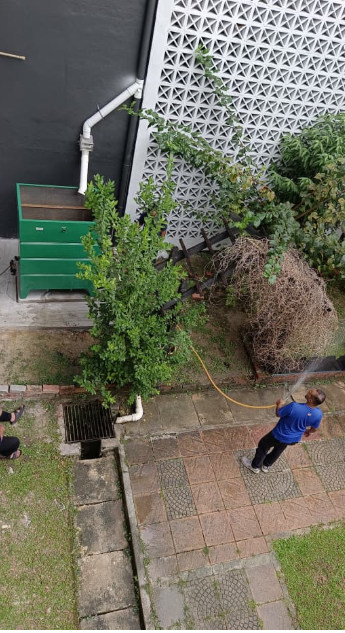
Sustainability, School of Chemical Engineering
At the Kompleks Penyelidikan Kanser, Pusat Kanser Tun Abdullah Ahmad Badawi, USM, a Rain Water Collection system captures and stores rainwater for gardening and other non-potable applications. The system reduces the use of treated mains water for routine landscape maintenance and contributes to USM’s institutional water-conservation measures.
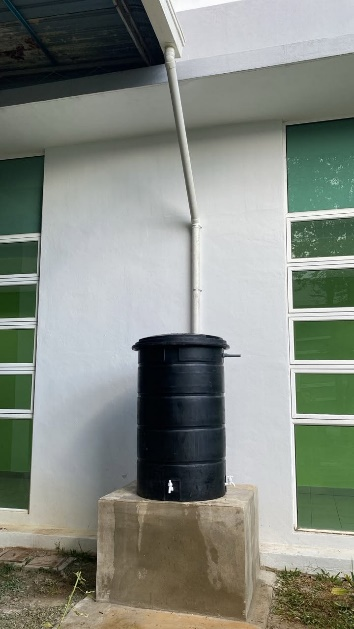
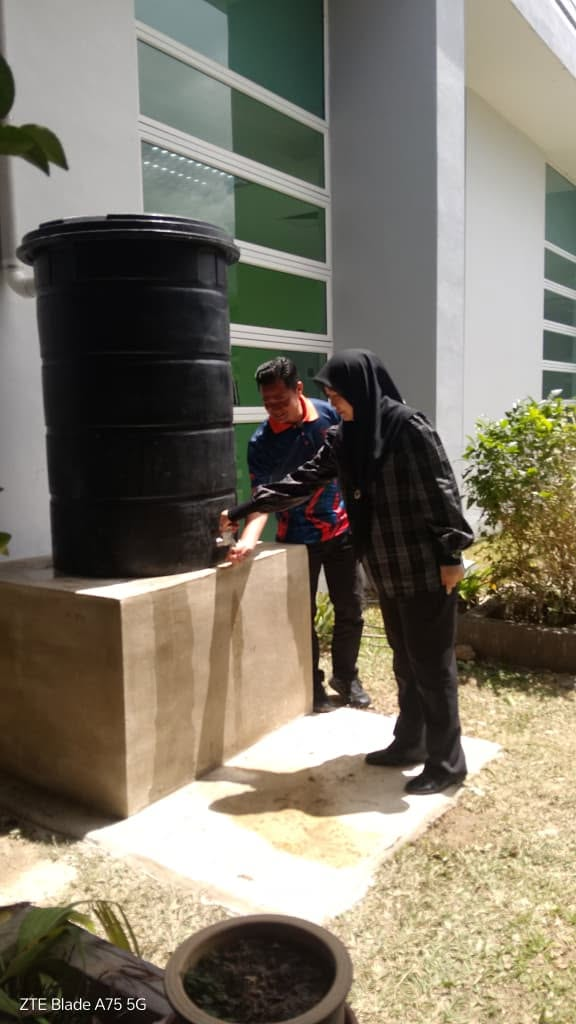
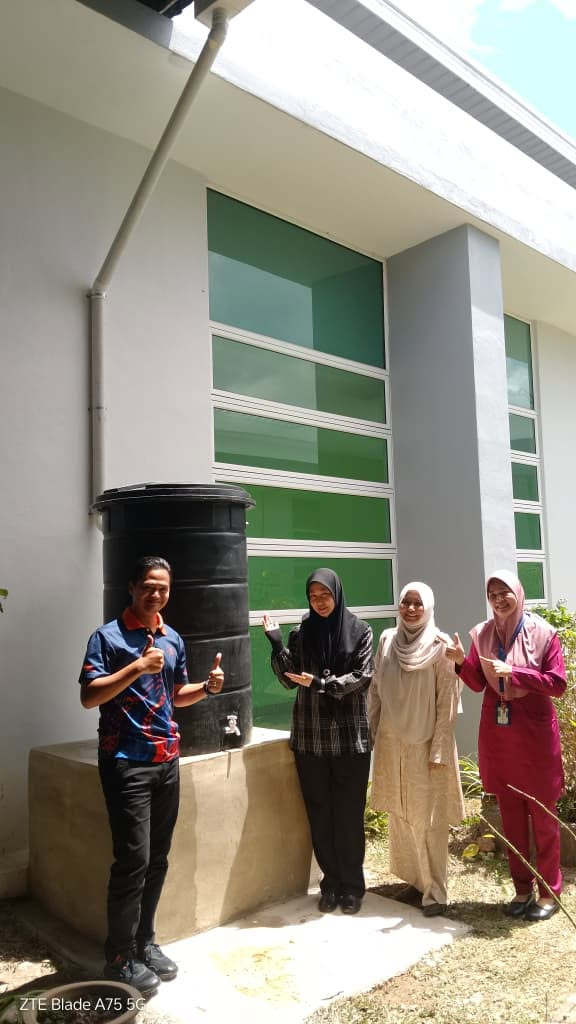
Through this whole-university measurement approach, USM records and evaluates the volume of water consumed from mains-supplied and applicable alternative water sources. The resulting data are used for sustainability reporting, consumption benchmarking, infrastructure planning, leakage control and the continual improvement of water-use efficiency across the University.
Sustainable water extraction on campus
USM is committed to sustainable water management across all its campuses by employing a variety of strategies, including the use of mains-supplied, extracted and desalinated water. The university actively measures the total volume of water used across the entire institution, encompassing all facilities and operations, to ensure responsible consumption and efficient management. These efforts are part of USM’s broader sustainability initiatives aimed at reducing water wastage, optimising resource utilisation and supporting the university’s environmental goals.
A. Mains supply
USM carefully manages water from the mains supply to ensure optimal usage and minimise wastage throughout its campuses.
B. Desalinated water
The desalination system at USM purifies brackish and seawater to produce potable water, thereby reducing the strain on natural freshwater sources while ensuring minimal environmental impact. Desalination methods include electrodialysis (ED) and reverse osmosis (RO). The treatment stages are flocculation, oxygenation, sedimentation, storage and suction tanks (see the water treatment photographs in the section above).
C. Extracted water
Malaysia is blessed with high rainfall intensity throughout the year, averaging approximately 2,600 mm annually. Taking advantage of this natural abundance, USM implements sustainable water extraction technologies by harvesting water through stormwater pond harvesting systems, rainwater harvesting tanks and tube wells. The collected water is then used for non-potable purposes such as landscape irrigation, laboratory use and toilet flushing, contributing to efficient and responsible water resource management across the campus.
Water extraction from the stormwater pond harvesting system. Stormwater pond water is used for various laboratory purposes at the Physical Modelling Laboratory (REDAC). Within the BIOECODS system, several interconnected ponds are reused for laboratory experiments, including physical modelling and hydraulic testing. The BIOECODS pond components include a wet pond with a storage capacity of 5,000 m³, a detention pond of 18,000 m³ and a recreational pond of 10,000 m³. The total volume provides sufficient water for non-potable applications such as gardening, laboratory experiments and toilet flushing.
Rainwater harvesting tank. Harvested rainwater is used for toilet flushing, car washing and irrigation.
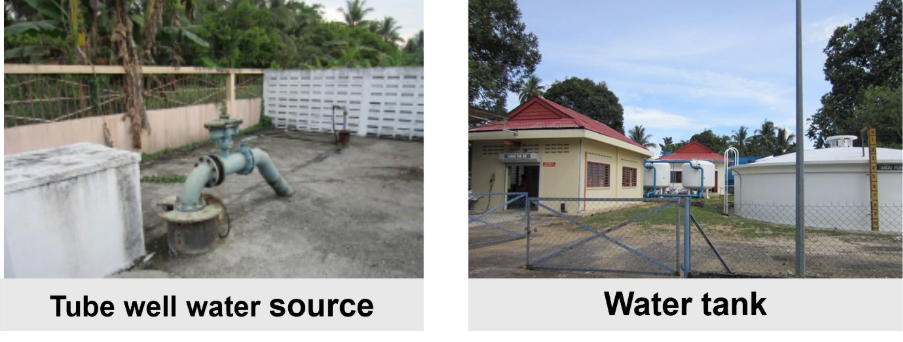
Tube well water extraction. Tube well water is for non-potable use, primarily toilet flushing.
Sustainable stormwater management system for water extraction
The USM Engineering Campus uses innovative and sustainable water extraction technologies that align with Sustainable Development Goal (SDG) 6, focusing on clean water and sanitation. A central component of this initiative is BIOECODS (Bio-Ecological Drainage System), which serves as a stormwater runoff catchment and treatment area integrated into the campus environment.
The BIOECODS system collects stormwater runoff from various parts of the campus, storing it in a recreational pond. This non-potable water is then pumped to physical laboratories for hydraulic studies, such as open channel tests, supporting the campus’s academic and research activities. After being used in these experiments, the water is recycled through a pump-driven system and returned to the pond for reuse. This cyclical process minimises water wastage and reduces the need for fresh water extraction, supporting sustainable practices within the campus environment.
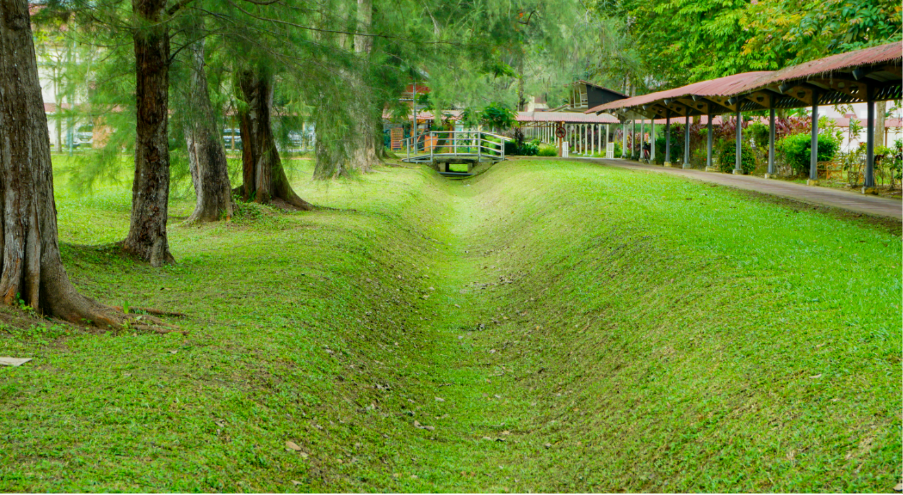
In addition to its use on campus, USM extends this technology to off-campus applications. By leveraging BIOECODS, USM has contributed to community initiatives and external projects that focus on sustainable water management, particularly in non-potable water use. This integration helps reduce the reliance on treated water resources in surrounding areas and demonstrates USM’s role in promoting eco-friendly water management practices beyond the campus.
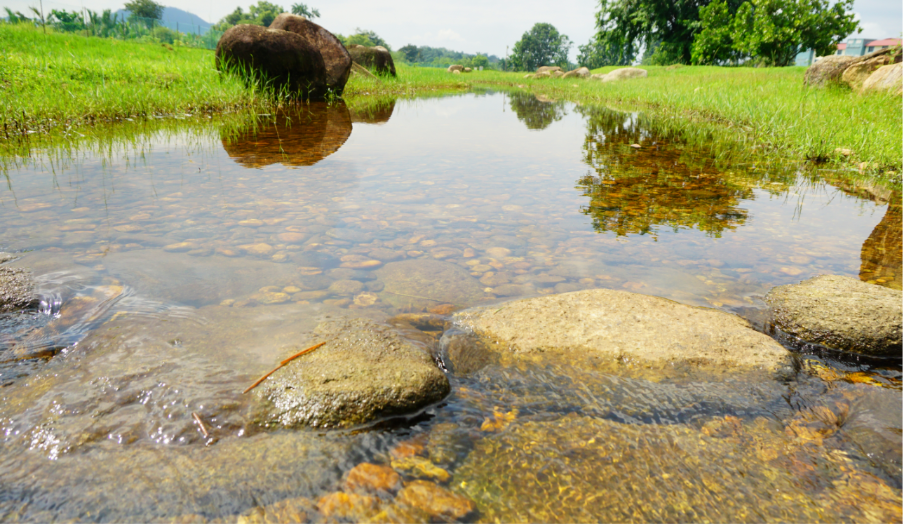
By employing stormwater instead of extracting water from aquifers, lakes or rivers, USM’s BIOECODS system provides a sustainable solution that reduces environmental impact both on and off campus. This approach highlights USM’s commitment to sustainable water extraction technologies, contributing to broader resource conservation efforts and supporting Malaysia’s progress towards achieving SDG 6.
Campus-wide wastewater treatment process
Universiti Sains Malaysia has an established process in place to treat wastewater: a process to collect, treat, monitor and safely discharge wastewater generated from its campus operations. At the USM Main Campus, wastewater from academic buildings, administrative offices, residential colleges and supporting facilities is conveyed through the campus sewerage network to designated sewage treatment plants (STPs) located across different operational zones. The campus master plan identifies multiple STPs serving these areas, demonstrating that wastewater treatment is implemented systematically across the campus rather than being limited to a single building or facility.

The treatment process begins with preliminary screening to remove plastics, debris and other non-biodegradable materials that could obstruct or damage the downstream treatment units. The screened wastewater subsequently enters the sedimentation stage, where settleable solids are separated as sludge and floating materials are removed from the wastewater.
Following primary settling, the wastewater undergoes biological treatment in an aeration tank. During this stage, aerobic microorganisms decompose biodegradable organic matter, thereby reducing the biochemical oxygen demand (BOD) of the wastewater. The aerated wastewater is then transferred to a secondary clarifier, where the remaining biological solids settle and are separated from the treated effluent. The clarified effluent subsequently passes through a sand-filtration unit for further polishing before discharge.
Sludge generated during the sedimentation and clarification stages is collected and managed separately through appropriate desludging and disposal procedures. This prevents accumulated sludge and associated contaminants from being released into the campus drainage system or surrounding environment.

Before discharge, the final treated effluent is tested monthly by certified laboratories to verify compliance with the applicable discharge limits prescribed under Malaysia’s Environmental Quality (Sewage) Regulations 2009. The monitoring includes relevant wastewater-quality parameters such as biochemical oxygen demand (BOD), chemical oxygen demand (COD), suspended solids, ammoniacal nitrogen, oil and grease, and other applicable indicators. Only treated effluent that satisfies the prescribed discharge requirements is released into the designated drainage system.
Through this structured process, USM ensures that wastewater is treated before discharge, treatment performance is regularly monitored, and potential pollution of receiving water bodies is minimised. The combination of multiple campus STPs, scheduled maintenance, sludge management and monthly effluent-quality testing demonstrates the University’s operational implementation of responsible wastewater management.
Preventing polluted water from entering the water system
Universiti Sains Malaysia has established preventive, operational and emergency-response processes to prevent polluted water entering the water system, including pollution arising from accidental chemical spills and other accidents and incidents at the university. These processes combine source-control procedures, proper hazardous-waste management, emergency spill response, routine inspection and the treatment of stormwater through the Bio-Ecological Drainage System (BIOECODS).
Pollution prevention at source
USM requires chemical, biological and other hazardous wastes generated by laboratories and operational facilities to be separated from the conventional wastewater and stormwater systems. Chemical waste is not discharged into laboratory sinks or campus drains. Instead, it is collected in compatible, clearly labelled containers, stored temporarily at designated locations and subsequently removed by contractors licensed by the Department of Environment Malaysia.
Biological and clinical wastes are similarly segregated, treated or disinfected where required, and placed in designated containers for authorised disposal. These procedures reduce the risk of hazardous substances entering the sewerage network, storm drains, ponds and receiving water bodies during routine university operations.
Laboratories and facilities handling hazardous materials also apply preventive controls such as chemical inventories, Safety Data Sheets, compatible chemical storage, secondary containment, designated waste-storage areas and regular workplace inspections. Together, these measures address potential pollution at its source before contaminants can enter the campus water system.
Response to accidental spills and pollution incidents
USM maintains emergency preparedness and response procedures for chemical spills and other pollution-related incidents. Chemical spill kits, mercury spill kits, hydrofluoric acid spill kits and other appropriate emergency equipment are provided at relevant laboratories and facilities according to the hazards present.
When an accidental spill occurs, trained personnel are required to isolate the affected area, stop the release where it is safe to do so, prevent the spilled material from reaching nearby sinks or drains, contain and absorb the material using the appropriate spill kit, and collect the contaminated absorbent as scheduled waste. The incident is subsequently reported, investigated and documented in accordance with USM’s occupational safety and health procedures. Where necessary, the University’s Emergency Response Team and relevant technical units are activated to manage the incident and prevent further environmental release.
These measures are supported by USM procedures covering chemical management, scheduled-waste management, emergency preparedness and response, incident reporting and investigation, departmental inspections and occupational safety and health audits.
Stormwater pollution control through BIOECODS
At the Tuanku Syed Sirajuddin Engineering Campus, BIOECODS provides an additional physical and ecological barrier against pollutants transported by stormwater runoff. The system captures and treats runoff from roads, car parks, buildings and landscaped areas before it leaves the campus.
Stormwater passes sequentially through bio-ecological swales, dry ponds, subsurface detention components, wet ponds, detention ponds, constructed wetlands and recreational ponds. These interconnected components slow the movement of runoff, promote sedimentation, filter suspended materials and support the biological removal or transformation of selected pollutants.
Vegetated swales trap sediments and associated pollutants, while detention ponds and wetlands provide hydraulic retention that reduces the immediate transport of contaminated runoff. Wetland vegetation, soil media and microbial communities further support filtration, adsorption and biological degradation processes. The system therefore reduces the pollutant load conveyed from the campus into downstream receiving waters.
BIOECODS does not replace the University’s chemical-spill response procedures. Instead, it functions as a secondary environmental safeguard should contaminated surface runoff inadvertently enter the campus drainage network. Source containment and immediate spill response remain the primary controls for preventing hazardous substances from reaching the water system.

Inspection and environmental monitoring
USM undertakes routine inspection and maintenance of relevant drainage components, treatment facilities and pollution-control equipment. Water-quality monitoring, vegetation maintenance, sediment management and inspection of drainage pathways help ensure that the BIOECODS components remain functional.
Monitoring results and incident records are used to identify operational deficiencies, initiate corrective actions and improve pollution-prevention practices. Through this integrated approach, USM has an established process to prevent, contain, manage and monitor water pollution arising from both routine campus activities and accidental incidents.


Water-conscious building standards
Universiti Sains Malaysia (USM) applies water-conscious building standards and operational standards across its campuses to improve water-use efficiency, minimise avoidable water loss and reduce dependence on treated municipal water. The approach combines infrastructure improvements, consumption and pressure monitoring, active leakage control, water-efficient sanitary fixtures, rainwater harvesting, water reuse and operational awareness, so that building standards are applied to minimise water use.
These measures have been implemented across the Main Campus, Tuanku Syed Sirajuddin Engineering Campus, Health Campus and Pusat Kanser Tun Abdullah Ahmad Badawi (PKTAAB). Collectively, they demonstrate that water conservation is incorporated into the planning, operation, maintenance and upgrading of university buildings and facilities. The initiatives are organised into five complementary areas:
- water monitoring, supply efficiency and leakage control;
- water-efficient building fixtures;
- rainwater harvesting and alternative water resources;
- water reuse and recycling; and
- water-conservation awareness and operational governance.
1. Water supply and infrastructure management
Water usage monitoring. A water-flow data logger was installed at the female hostel toilets at the Engineering Campus to record actual consumption. The resulting data supports consumption review, user awareness and evidence-based facility management.

USM Engineering Campus water supply upgrade. Under the Twelfth Malaysia Plan (RMK-12) Rolling Plan 2, USM upgraded the clean-water supply system at the 364.9-acre Engineering Campus with an allocation of RM6.15 million. The project includes a 30-metre elevated tank with a capacity of 1.597 million litres, a 795,000-litre suction tank, pump houses and associated electrical and mechanical systems. The system serves approximately 3,900 campus residents and can support campus demand for up to two days during a supply interruption.
The design improves distribution reliability and pressure control while reducing the risk of water loss caused by unstable supply conditions. Pressure-monitoring points at selected locations enable staff to identify abnormal fluctuations that may indicate leaks, blockages or inefficient network performance.


Active leakage control at the Main Campus. USM conducted an Active Leakage Control Study for the internal distribution network at Kompleks Desasiswa Restu, Saujana and Tekun (RST). The study, undertaken by Wyeth Water Consultants with the Department of Development and Facilities Management (JPPF), focused on leaks occurring downstream of the PBA main meter. This proactive measure supports timely leak identification, repair and reduction of internal water losses.

Prompt reporting of water-related faults at PKTAAB. At PKTAAB, staff at the administrative offices of the Cancer Research Complex (CRC), Cancer Teaching Complex (CTC) and Sains@Bertam report water-related damage and faults immediately through the DV3 system. The reporting mechanism enables early corrective action and helps prevent prolonged water wastage from unresolved defects. It complements USM’s leakage-control activities by extending water-loss prevention into routine facility operations.
2. Water-efficient building fixtures
Dual-flush toilets and aerated basin taps. USM has installed dual-flush toilet systems across schools and research centres, allowing users to select a lower flush volume for liquid waste. Basin taps equipped with aerators mix air into the water stream to control flow while maintaining usable pressure. These fixtures reduce unnecessary demand at the point of use compared with conventional single-volume or unrestricted fittings.


Reduced-flow water outlets at PKTAAB. Smaller water-flow outlets or nozzles are installed at the CRC and CTC to provide a focused, slower flow for cleaning activities. The intervention controls the quantity discharged at the point of use while retaining a practical flow. This evidence broadens the response from conventional sanitary fixtures to operational water outlets in PKTAAB facilities.

3. Rainwater harvesting and resource utilisation
School of Civil Engineering, Tuanku Syed Sirajuddin Engineering Campus. A rooftop rainwater-harvesting system with an estimated storage capacity of 2,800 litres (2.8 m³) is installed at the School of Civil Engineering. Harvested rainwater is used mainly for landscape irrigation near the herb garden and for maintaining a small catfish pond in the nearby greenhouse. The system reduces reliance on treated water for suitable non-potable uses.


Health Campus USM. At the Health Campus, the RWDP system channels collected rainwater to two tanks located behind the HC substation. The tanks have a combined capacity of approximately 32,000 litres (2 × 4,000 gallons) and supply non-potable water to four toilet units, a car-washing area and the nursery garden.

SmartDrops: rainwater harvesting for eco gardens, School of Humanities, Main Campus USM. SmartDrops revitalised an inactive rainwater-harvesting system between buildings C20 and C24. One tank has a stated capacity of 7,570.82 litres. Harvested water supports a fishpond and vertical garden, while Internet of Things (IoT) sensors monitor water level, flow and quality parameters. The site functions as a living laboratory and public demonstration of water conservation, ecological design and smart management.
- Reduces dependence on municipal water for landscape irrigation and pond maintenance.
- Supports automated monitoring and more efficient water distribution.
- Provides an educational platform for students, staff and visitors.
- Contributes to biodiversity, runoff reduction and sustainable campus operations.


Rainwater collection for landscaping at PKTAAB. PKTAAB collects rainwater for watering plants and flowers around the Cancer Research Complex (CRC). This practice substitutes harvested water for treated supply in a suitable non-potable application and demonstrates a simple, replicable conservation measure at facility level.


4. Water reuse and recycling initiatives
Clinical Diagnostic Laboratory, Cancer Teaching Complex, PKTAAB. The Clinical Diagnostic Laboratory (CDL) at the Cancer Teaching Complex (CTC), PKTAAB, applies two water-reuse practices. First, water recovered from the internal distillation process is reused for preparing buffer reagents where its quality is suitable. Second, condensate collected from dehumidifiers is reused to prepare machine-cleaning mixtures for non-critical cleaning activities. These practices extend the useful life of collected water, reduce avoidable freshwater demand and reduce the need to procure water for suitable secondary applications. The laboratory uses a 10-litre collection tank and collects approximately 10 litres of dehumidifier condensate daily, equivalent to about 300 litres per month.


5. Awareness and operational governance
Water-conservation awareness at PKTAAB. Water-saving reminder stickers are displayed at selected points of consumption at the CRC, CTC and Sains@Bertam, including toilets and the surau. The reminders reinforce responsible behaviour among staff, students and visitors, discourage wastage and make water conservation visible in daily operations. Awareness is treated as a supporting operational control rather than a substitute for efficient infrastructure and monitoring.

Overall contribution
USM applies water-conscious building standards through an integrated portfolio of measures across multiple campuses. Supply upgrades and pressure monitoring improve network resilience; leakage studies and DV3 reporting reduce avoidable loss; dual-flush systems, aerators and reduced-flow outlets control demand at the point of use; rainwater harvesting substitutes treated water for non-potable applications; and laboratory reuse extends the useful life of internally recovered water. Together, these measures provide a coherent evidence base for USM’s implementation of building and operational standards that minimise water use.
| Measure | Recorded value | Location / use |
|---|---|---|
| Elevated water tank | 1.597 million L | Engineering Campus |
| Suction tank | 795,000 L | Engineering Campus |
| Rainwater storage | 2,800 L | School of Civil Engineering |
| Rainwater storage | ≈32,000 L | Health Campus |
| SmartDrops tank | 7,570.82 L | Main Campus |
| Reported dehumidifier recovery | ≈10 L/day; 300 L/month | CDL, CTC, PKTAAB |
Water-conscious planting
USM promotes water-conscious planting as part of its sustainability initiatives, minimising water usage across its campuses by incorporating drought-tolerant plants into its landscape. This is consistent with the USM Sustainability Policy (Revised 2025), Section 6.1 Clean Water & Sanitation [SDG 6], page 3, which promotes sustainable and integrated water management and the reduction of water consumption on campus. Under the University in a Garden concept, USM creates a garden-like environment that fosters a deep appreciation for nature while reducing resource consumption. This approach includes planting water-efficient species such as Eugenia oleana, Pandanus sp., Ixora sp. and banana circles, which require minimal care and water once established.

USM promotes a water-conscious planting landscape by using local and drought-tolerant species such as Ixora sp. (Bunga Jarum), Pandanus sp. and Eugenia oleana (Kelat Paya), along with banana circles that recycle greywater and nutrients. These plants are selected for their adaptability to Malaysia’s climate, requiring minimal irrigation while maintaining lush greenery. Supported by the School of Industrial Technology under the Bukit TI Project, practices such as composting, grass-cycling and mulching further enhance soil moisture retention and reduce water use. Together, these initiatives embody USM’s sustainable landscaping approach in line with SDG 6 (Clean Water and Sanitation).

On the Engineering Campus, the River Engineering and Urban Drainage Research Centre (REDAC) applies phytoremediation techniques using local wetland plant species such as Typha angustifolia, Lepironia articulata and Hanguana malayana within its bio-retention systems and ponds. These native plants are naturally adapted to Malaysia’s tropical climate and wetland conditions, requiring minimal maintenance and irrigation once established. Their deep root systems help absorb excess nutrients and pollutants, improving water quality and supporting stormwater management through natural filtration and sediment trapping.
This initiative also reflects the principle of water-conscious planting, where landscape design is optimised to minimise water usage and dependency on external irrigation sources. Incorporating local plant species, drought-tolerant and water-efficient wetland species, the system not only conserves water but also enhances biodiversity and ecological resilience. These integrated efforts underscore USM’s strong commitment to sustainable water management and environmental conservation across all campuses.


Water discharge guidelines and standards
Universiti Sains Malaysia (USM), through its River Engineering and Urban Drainage Research Centre (REDAC), implements the Bio-Ecological Drainage System (BIOECODS) at the USM Engineering Campus in Nibong Tebal, Penang, as an integrated approach to sustainable stormwater management, water quality protection and aquatic ecosystem conservation. BIOECODS is a national pilot project designed to restore natural environmental functions, maintain river flow, manage stormwater runoff and reduce the impacts of urban development on downstream waterways. Its design integrates engineering infrastructure with ecological components to address both water quantity and water quality while supporting aquatic biodiversity. The system provides evidence of USM’s approach to water discharge guidelines and standards and a watershed management strategy based on the location-specific diversity of aquatic species.
Recognised guidance and water quality standards
USM’s BIOECODS incorporates recognised Malaysian stormwater management guidance and water quality standards and guidelines for water discharges into its drainage design. The system follows the Urban Stormwater Management Manual for Malaysia (MSMA), which promotes a “control-at-source” approach to managing stormwater runoff. This approach is intended to manage runoff quantity and quality before the water reaches larger water bodies, reducing pollution risks and limiting the environmental impacts of urban drainage. BIOECODS applies these principles through a sequence of vegetated channels, ponds and wetlands that manage runoff from source to downstream receiving waters.
In relation to discharge quality, REDAC identifies the National Water Quality Standards for Malaysia (NWQS) as the relevant reference for protecting water quality before BIOECODS discharge reaches the Kerian River. The system is designed with reference to Class II A/B of the NWQS, with the stated objective of protecting aquatic ecosystems, wildlife and human health and welfare while balancing habitat conservation and human water use. The water quality parameters identified by REDAC include dissolved oxygen (DO), total suspended solids (TSS), biochemical oxygen demand (BOD) and chemical oxygen demand (COD). These parameters help characterise important aspects of water quality and the potential effects of runoff on aquatic environments.
How the design upholds water quality
The implementation of these guidelines is supported by the physical design of BIOECODS. Ecological swales slow surface runoff, encourage infiltration and filter suspended solids. Dry ponds and detention ponds temporarily store runoff, attenuate peak flows and allow sediments to settle. Wet ponds and constructed wetlands provide additional treatment through sedimentation, biological filtration and the uptake of nutrients by aquatic plants and microorganisms. Together, these components are designed to reduce pollutant transport and moderate the physical, chemical and biological changes that stormwater can cause in downstream aquatic ecosystems.
The treatment process also helps manage the volume and speed of water entering receiving waterways. By slowing and storing runoff, BIOECODS reduces sudden flow surges that may contribute to flooding, erosion and disturbance of aquatic habitats. The system’s integrated approach therefore addresses both the quantity and quality of water discharged, supporting the protection of downstream ecosystems and contributing to sustainable water resource management.
REDAC also makes water-quality-related research resources publicly available through its BIOECODS webpage, including a nutrient and pollutant trend figure covering TSS, BOD, COD, nitrite, ammonia, nitrate and phosphate, as well as illustrations of discharge-water quality and the NWQS. These resources provide a basis for understanding the system’s water treatment objectives and research context.


Watershed management strategy based on local aquatic species
BIOECODS also functions as a location-specific watershed management strategy for the Kerian River watershed. Rather than treating stormwater drainage solely as a means of removing excess water from developed areas, the system integrates water management with the ecological needs of the local watershed. REDAC explicitly identifies the importance of considering the diversity of native aquatic species and tailoring stormwater management to the environmental conditions of the Kerian River area.
Interconnected green infrastructure
The strategy is implemented through interconnected green infrastructure that follows the movement of runoff through the drainage system. Ecological swales convey and filter water while providing vegetated corridors that can support wildlife, including amphibians and invertebrates associated with aquatic food webs. Constructed wetlands provide treatment functions and potential habitat for native aquatic organisms. REDAC describes wetland vegetation as providing shelter and food resources for fish, invertebrates and other aquatic organisms, while also supporting natural filtration. These features integrate water treatment and habitat functions within the same watershed management system.
Detention ponds and wet ponds provide a further component of the watershed strategy by regulating runoff and reducing abrupt changes in downstream flow. Temporarily storing stormwater and releasing it more gradually can help reduce flood-related disturbance to aquatic habitats. Wet ponds also support sedimentation and nutrient uptake by aquatic plants, complementing the pollutant-removal functions of the swales and wetlands. Through the combined operation of these components, BIOECODS is designed to manage the physical and water-quality pressures associated with urban development while maintaining environmental conditions that support aquatic life.

The Kerian River watershed
The location-specific design is particularly relevant to the Kerian River because downstream water quality and flow conditions are influenced by how runoff is managed within the surrounding catchment. REDAC states that BIOECODS is intended to help maintain the downstream Kerian River waterway in a natural environment. Its emphasis on source control, infiltration, storage, flow attenuation and ecological treatment connects drainage management with the wider objective of maintaining watershed integrity and aquatic biodiversity.
USM’s implementation of BIOECODS also extends beyond the original Engineering Campus pilot. REDAC reports that the approach has been applied to projects across eight Peninsular Malaysian states, with nearly 20 projects implemented since the system’s inception, primarily in government building developments. The listed projects include developments in Penang, Pahang, Kelantan, Perak, Kedah, Johor, Selangor and Terengganu. This wider application demonstrates the transfer of BIOECODS principles to different development settings.
BIOECODS demonstrates how USM combines water discharge standards with a location-specific watershed management strategy. The application of MSMA and the use of NWQS Class II A/B as a water quality reference establish the framework for managing stormwater and protecting downstream receiving waters, while the interconnected swales, ponds and constructed wetlands provide the practical infrastructure through which runoff is slowed, stored and treated before reaching natural waterways. By considering the ecological functions of wetlands, vegetated channels and ponds, BIOECODS connects the management of stormwater pollution and flow with the maintenance of aquatic habitats in the Kerian River watershed.
Plan to minimise alterations of aquatic ecosystems
Universiti Sains Malaysia (USM) adopts an integrated approach to minimising physical, chemical and biological alterations of aquatic ecosystems through its institutional sustainability framework, ecological drainage infrastructure, water quality management practices and marine conservation research. The university’s approach recognises that campus development, stormwater discharge, wastewater generation, land-based pollution and coastal activities can affect aquatic environments if they are not appropriately managed. Through the USM Sustainability Policy, particularly Section 6.5 on Life Below Water, and the work of the River Engineering and Urban Drainage Research Centre (REDAC) and the Centre for Marine and Coastal Studies (CEMACS), USM establishes a framework for managing these pressures and protecting the ecological integrity of aquatic environments.
The framework combines preventive planning, environmentally sensitive infrastructure and scientific research. Its central objective is to manage water movement and quality, reduce pollution entering natural waterways, and incorporate ecological considerations into drainage and marine management activities.
Institutional policy framework
Section 6.5, Life Below Water, of the USM Sustainability Policy addresses the university’s responsibility to protect aquatic environments and promote the sustainable management of water-related ecosystems. This policy framework provides the context for measures addressing wastewater, stormwater runoff, pollution prevention and the protection of aquatic biodiversity. The management of aquatic ecosystem impacts addresses three interconnected dimensions:
- Physical alterations: changes in water flow, erosion, sediment transport and drainage patterns.
- Chemical alterations: changes in water quality caused by suspended solids, nutrients and other pollutants.
- Biological alterations: disturbances to aquatic habitats, native vegetation and the organisms dependent on them.
USM’s approach addresses these dimensions through water management infrastructure and research-based environmental practices. In particular, BIOECODS at the Engineering Campus provides a practical framework for managing stormwater before it reaches receiving waterways, while CEMACS contributes marine scientific expertise to ecosystem assessment and conservation activities.
Minimising physical alterations through BIOECODS
A major component of USM’s approach is the Bio-Ecological Drainage System (BIOECODS), developed and implemented at the Engineering Campus in Nibong Tebal, Penang, through REDAC. BIOECODS integrates conventional drainage functions with ecological components to manage stormwater runoff, reduce peak flows and support water quality protection. Unlike drainage approaches focused primarily on removing water quickly, it incorporates ecological swales, detention ponds, wet ponds and constructed wetlands to manage runoff through a sequence of interconnected components, following the principles of Malaysia’s Urban Stormwater Management Manual (MSMA), including the control-at-source approach.
These design features are relevant to the prevention of physical alterations because they are intended to slow runoff, temporarily store stormwater and reduce abrupt changes in downstream flow. Ecological swales convey runoff while promoting infiltration and filtering suspended material. Detention ponds temporarily store excess water and attenuate peak discharge, while wet ponds provide additional storage and sedimentation functions. By incorporating these features into campus drainage infrastructure, USM establishes a planned approach to reducing the potential for uncontrolled runoff, erosion and flow-related disturbance to downstream aquatic environments. The official REDAC BIOECODS documentation describes the system’s design, components and environmental functions.
Minimising chemical alterations through stormwater treatment
Chemical changes in aquatic ecosystems may occur when runoff transports suspended solids, excess nutrients and other pollutants into receiving waters. USM addresses this risk through BIOECODS, which incorporates multiple treatment stages intended to improve stormwater quality before discharge. Ecological swales help filter suspended material as runoff moves through vegetated channels. Detention ponds allow water to remain temporarily within the system, facilitating the settlement of suspended particles. Constructed wetlands and wet ponds provide further treatment through sedimentation, biological processes and the uptake of nutrients by aquatic vegetation and microorganisms.
REDAC identifies the National Water Quality Standards for Malaysia (NWQS) as a reference for water quality protection and identifies Class II A/B in the context of the BIOECODS design. The chemical parameters identified in REDAC’s BIOECODS documentation include dissolved oxygen, total suspended solids, biochemical oxygen demand and chemical oxygen demand. Through the combination of water quality references and multi-stage stormwater treatment infrastructure, BIOECODS provides a practical approach to minimising chemical alterations associated with campus runoff.
Minimising biological alterations and supporting aquatic biodiversity
The protection of aquatic ecosystems also requires consideration of biological conditions, including the habitats and resources needed by native aquatic organisms. BIOECODS integrates ecological features into drainage infrastructure rather than treating the drainage network solely as an engineered water conveyance system. Vegetated swales and constructed wetlands provide ecological features that can support organisms associated with aquatic and wetland environments. Wetland vegetation can offer habitat structure, shelter and food resources for aquatic organisms, while the interconnected ponds and vegetated channels contribute to a more ecologically integrated drainage environment. These features are intended to improve the compatibility of stormwater management infrastructure with aquatic habitats and reduce the potential for drainage-related disturbance.
At the wider institutional level, USM’s marine research and conservation work through CEMACS complements this approach by incorporating scientific investigation into the management of coastal and marine environments. One example is CEMACS’s strategic marine restocking initiative off Pulau Betong, Penang. On 28 February 2025, USM reported the release of 10,000 tiger prawns (Penaeus monodon) as part of the Penang South Island Ecology Offset Masterplan. The initiative incorporated scientific species selection and identified monitoring and genetic studies as components of the broader programme. Restocking must consider the ecological suitability of the receiving environment and the potential interactions between released organisms and existing marine populations, and monitoring helps researchers evaluate the movement and performance of released species and inform subsequent conservation decisions.
USM’s approach combines institutional sustainability commitments, ecological drainage infrastructure, stormwater treatment and marine scientific research to address the principal pathways through which aquatic ecosystems may be altered. For physical alterations, BIOECODS incorporates swales, detention ponds and wet ponds to manage runoff and reduce peak flows. For chemical alterations, its multi-stage treatment components are designed to reduce suspended solids and other pollutants entering receiving waterways, guided by recognised stormwater management principles and water quality references. For biological alterations, its vegetated channels and constructed wetlands incorporate habitat-supporting features, while CEMACS’s marine research contributes scientific knowledge relevant to the management of marine species and ecosystems.
Monitoring the health of aquatic ecosystems
Universiti Sains Malaysia (USM), through the Centre for Marine and Coastal Studies (CEMACS), strengthens the monitoring of the health of aquatic ecosystems through international scientific collaboration, long-term coastal observation and targeted marine environmental research. A significant development in this effort was the establishment of the Malaysia–China Joint Coastal Long-Term Marine Scientific Observation Station (MSOS) in collaboration with China’s Third Institute of Oceanography (TIO). Officially launched on 26 May 2025 at CEMACS, the station provides a collaborative framework for advancing marine scientific observation, investigating coastal environmental conditions and strengthening the scientific capacity needed to understand and protect aquatic ecosystems.
The initiative builds on a Memorandum of Agreement (MOA) between USM and TIO to advance long-term marine scientific research, research capacity building and coastal ecosystem protection. The launch was officiated by former CEMACS Director Professor Dato’ Dr Aileen Tan Shau Hwai and TIO Deputy Chief Engineer Professor Dr Jianhui Liu, marking an important step in strengthening international cooperation in marine observation and environmental research.

A framework for long-term marine ecosystem monitoring
The establishment of MSOS strengthens USM’s institutional framework for monitoring the health of coastal and marine ecosystems. Long-term marine observation is important for understanding changes in coastal environments, identifying emerging environmental pressures and developing scientific evidence to support ecosystem management. Through the collaboration, CEMACS and TIO seek to strengthen systematic observation of coastal environments and improve the collection of scientific information relevant to marine ecosystem conditions. Long-term monitoring can help researchers investigate changes in environmental parameters, identify potential threats to aquatic habitats and provide a scientific basis for assessing the condition of marine ecosystems over time.
The station also provides a platform for collaborative marine scientific research, enabling researchers from both institutions to combine their expertise and develop approaches to address shared coastal sustainability challenges.
Monitoring environmental threats and harmful algal blooms
An important component of the MSOS research framework is the investigation of environmental threats affecting coastal waters, including Harmful Algal Blooms (HABs) in coastal aquaculture areas across southeast Penang. HABs can pose challenges to marine ecosystem health and coastal aquaculture. Investigating their occurrence and environmental context is therefore relevant to understanding potential risks to aquatic organisms and the sustainability of coastal activities.
Under the MSOS framework, field validation and satellite monitoring are identified as complementary approaches for investigating HAB occurrences. Field observations can provide information about local environmental conditions, while satellite-based monitoring can help researchers examine broader spatial patterns and identify areas requiring further investigation. Combining these approaches can strengthen the scientific assessment of coastal environmental conditions and support the identification of potential ecological threats.
Integrated marine technologies and data collection
The MSOS initiative also emphasises the development of integrated marine technologies and scientific methods to strengthen environmental data collection. Through collaboration between CEMACS and TIO, the station aims to develop integrated tools and methods that address regional marine sustainability challenges. The integration of field-based observations and satellite monitoring within the research framework is particularly relevant to understanding environmental changes that may not be fully captured by isolated observations.
CEMACS and the Marine Ecology Research Centre (MERC) also operate the South China Sea’s first Ocean Acidification Monitoring Station, which is equipped with Autonomous Reef Monitoring Structures (ARMS). The station supports monitoring of climate-related changes in marine environments, particularly the effects of increasing ocean acidity on coral and mollusc larvae.
Research capacity and international collaboration
The long-term effectiveness of aquatic ecosystem monitoring also depends on the availability of skilled researchers, appropriate scientific methods and sustained institutional cooperation. The MSOS framework addresses these needs through planned postgraduate training, researcher exchanges, scientific symposia and joint marine expeditions. These activities are intended to strengthen technical expertise, facilitate the exchange of scientific knowledge and support collaborative marine research between Malaysia and China.
The establishment of the Malaysia–China Joint Coastal Long-Term Marine Scientific Observation Station demonstrates USM’s direct engagement in marine scientific monitoring and coastal ecosystem research. Through CEMACS, USM has established an international collaboration with TIO that provides a framework for long-term coastal observation, targeted investigations of environmental threats, integrated scientific data collection and researcher capacity building, focusing on observing coastal environments, investigating HAB occurrences in aquaculture areas and strengthening the scientific methods used to assess marine environmental conditions.