


-
Solid Waste
Waste Tracking Across the Whole University
Universiti Sains Malaysia measures the amount of waste generated and recycled across the whole university. Waste generation and recycling performance are tracked annually for all campuses and operational units, supporting SDG 12: Responsible Consumption and Production.
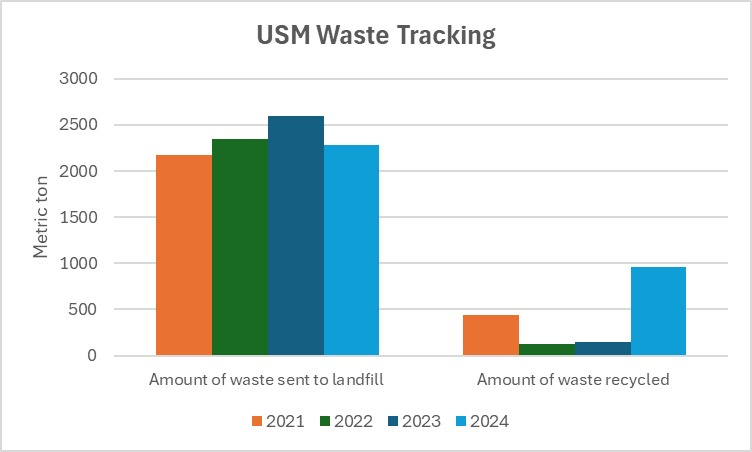
In 2024, 29 percent of total waste across the whole university was recycled, while 71 percent was sent to landfill, marking a significant improvement compared to previous years. The amount of waste recycled increased sharply from 143 to 955 metric tons, while landfill waste was reduced from 2,595 to 2,285 metric tons.
These achievements highlight the success of USM’s Green Office and Green Desasiswa Programme and the campus-wide waste segregation initiatives. Collectively, these efforts demonstrate that USM is progressing toward its vision of a circular and zero-waste campus through systematic waste tracking and responsible waste management across the whole university.
Please refer below for the graph of measurement.
Policy on Waste Disposal
Universiti Sains Malaysia as a policy on waste disposal that supports sustainable waste management practices, including efforts to measure the amount of waste sent to landfill and recycled. This commitment is outlined in the USM Sustainability Policy (Revised 2025) under Section 6.7: Production and Consumption (SDG 12), pp. 5-6, which emphasizes responsible waste handling and resource efficiency across all campuses.
The policy highlights USM’s dedication to sustainable waste management operations, focusing on the transformation of waste into valuable resources through the “waste-to-wealth” concept. This includes proper segregation, recycling, and data monitoring to measure waste generation and disposal, ensuring that the volume of waste sent to landfill is progressively reduced.
In addition, USM conducts periodic waste audits to evaluate the quantity of recyclable and non-recyclable waste, supporting continuous improvement in landfill diversion rates. These efforts reflect the university’s proactive stance in advancing sustainable production and consumption, reducing environmental impact, and fostering a culture of resource conservation among staff and students.
Policy for Minimisation of Disposable Items
Complementing its waste disposal policy, USM also upholds a policy for the minimisation of disposable items to encourage the reduction of single-use materials and promote sustainable alternatives in everyday campus activities. As stated in the USM Sustainability Policy (Revised 2025) under Section 6.7: Production and Consumption (SDG 12), pp. 5-6, the university is committed to reducing waste at the source by adopting eco-friendly procurement practices and minimizing reliance on disposable products.
This policy encourages the use of reusable and recyclable alternatives, the reduction of single-use plastics, and awareness campaigns to promote responsible consumption across campus operations. Cafeterias, offices, and event organizers are encouraged to use refillable containers, biodegradable packaging, and water dispensers instead of bottled water.
The initiative also supports the objectives of Malaysia’s Roadmap Towards Zero Single-Use Plastics, promoting reduced dependence on non-recyclable materials and the adoption of environmentally responsible practices throughout campus facilities. Through these efforts, USM ensures the minimisation of disposable items is effectively implemented as part of its long-term sustainability framework.
Policy on Plastic Use Minimisation and Waste Reduction
Universiti Sains Malaysia has established a comprehensive policy to minimise and reduce plastic waste use across its campuses, as outlined in the USM Sustainability Policy 2014 (Revised 2025), Section 6.7: Production and Consumption [SDG12] (pp. 5-6). The policy recognises that unsustainable production and consumption patterns contribute significantly to pollution and the depletion of natural resources.
To address these challenges, USM adopts Malaysia’s Roadmap Towards Zero Single-Use Plastics, which serves as a guiding framework for the university’s plastic minimisation strategy. The policy calls for the gradual elimination of single-use plastics such as plastic straws, bags, and disposable food packaging, encouraging the use of eco-friendly, reusable, or biodegradable alternatives by campus operators, vendors, and service providers.
In addition to product substitution, the policy emphasises responsible consumption, waste segregation, and recycling practices to prevent plastic leakage into the environment. Awareness campaigns and educational programmes are conducted regularly to raise understanding among students, staff, and local partners about the harmful effects of plastic pollution and the importance of sustainable habits.
The policy also encourages collaboration with local organisations and businesses to develop innovative solutions that reduce dependency on plastic materials. By promoting the concept of “waste to wealth,” USM transforms waste into valuable resources, advancing the vision of a low-carbon and zero-waste campus.
Through this proactive approach, USM demonstrates institutional leadership in responsible production and environmental preservation, supporting the United Nations Sustainable Development Goals (SDG 12 and SDG 15).
USM Action Plan to Reduce Plastic Waste on Campus
Universiti Sains Malaysia (USM) has established a comprehensive Action Plan to Reduce Plastic Waste that aligns with its institutional sustainability strategy and commitment to environmental health. The plan, coordinated by the Division of Industry and Community Network (DICN) under the Deputy Vice-Chancellor’s Office, aims to progressively eliminate single-use plastics across all campuses by 2030, with phased implementation beginning in 2024.
The plan is anchored in USM’s Strategic Objective 1: Strengthen Sustainable Water and Waste Practices for Environmental and Community Health, which sets measurable targets for waste reduction and plastic elimination. The action plan initiatives include the implementation of a Zero-Waste Campus Framework, campus-wide awareness campaigns, and community engagement programmes to promote behavioural change. The short-term (2026) target specifies that at least 80% of the main campus will be designated as plastic-free, expanding to 100% across all campuses by 2030.
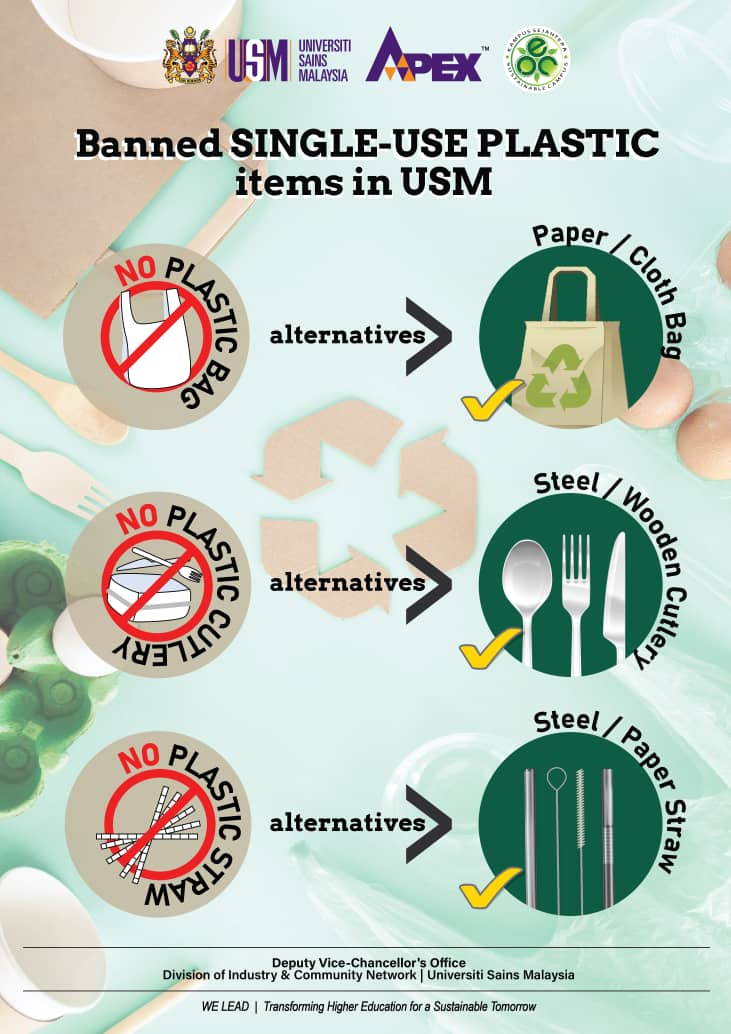
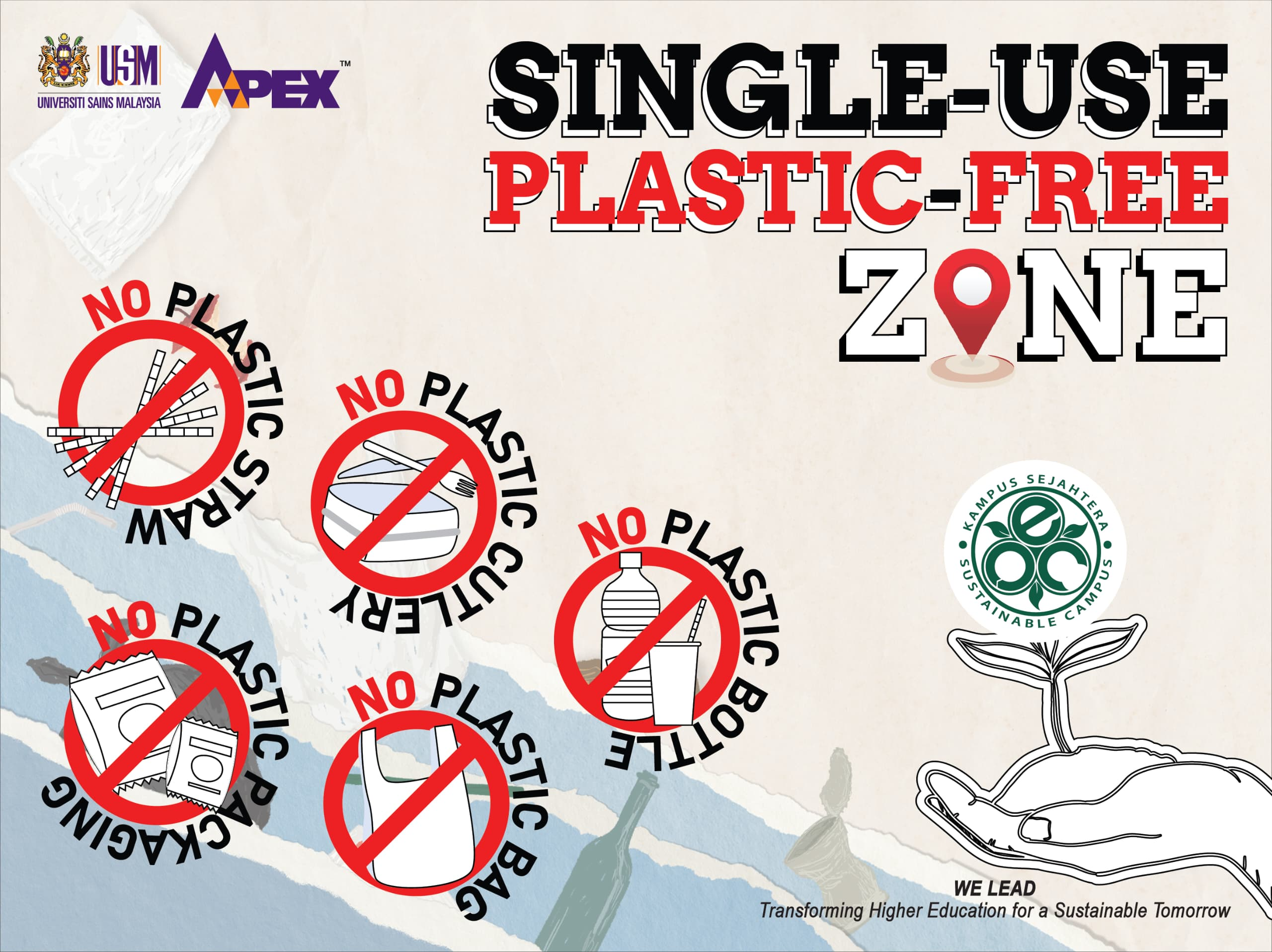
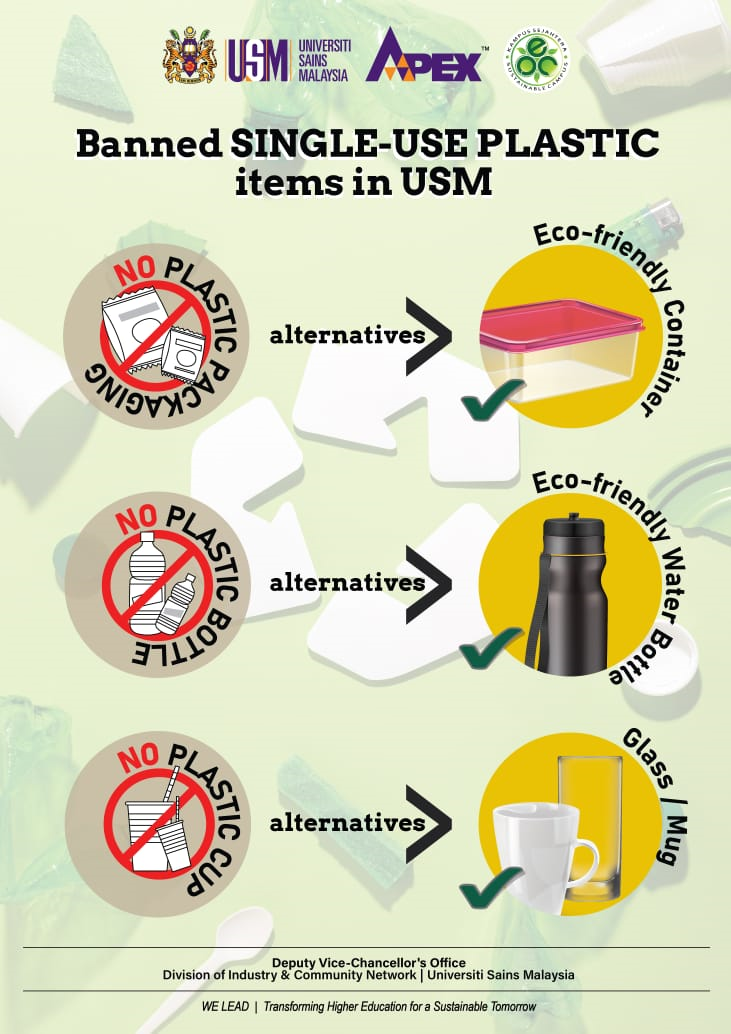
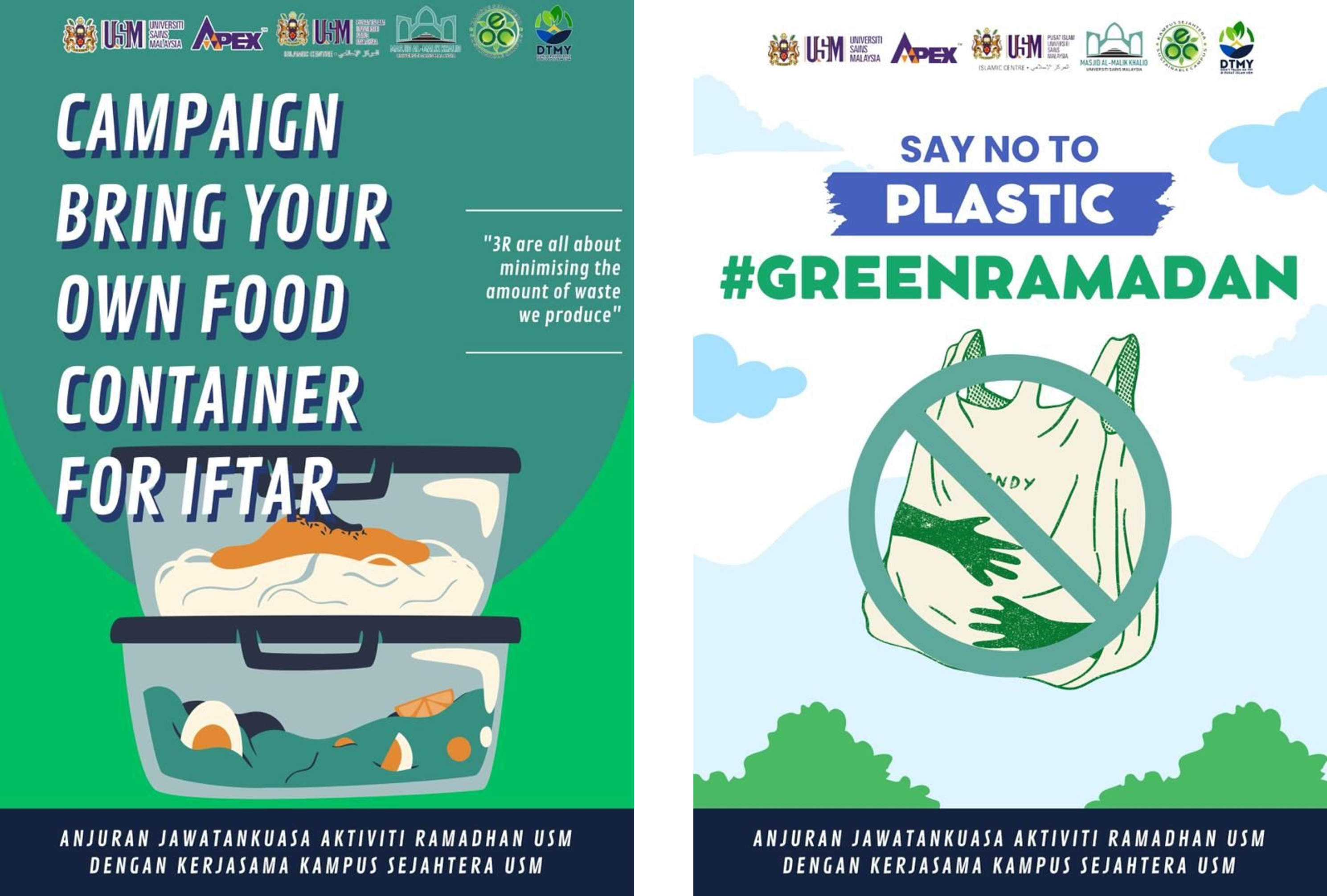
To reinforce these goals, USM has launched visible “Single-Use Plastic-Free Zone” campaigns and posters that ban plastic bags, bottles, cups, cutlery, and straws while promoting sustainable alternatives such as reusable steel or wooden utensils, glass mugs, and eco-friendly containers. Initiatives such as “Say No to Plastic – #GreenRamadan” and “Bring Your Own Food Container for Iftar” highlight community participation in reducing single-use plastic consumption during university events and daily operations.
Implementation of this action plan is supported by continuous monitoring and reporting through USM’s sustainability office. Progress indicators include waste diversion rates, percentage of plastic-free zones, and the number of awareness programmes held annually. Through this structured and measurable approach, USM ensures that its action plan to reduce plastic waste is both operational and impactful, fostering a culture of responsibility and sustainability across the university community.

-
Food Waste
Food Waste Measurement and Tracking
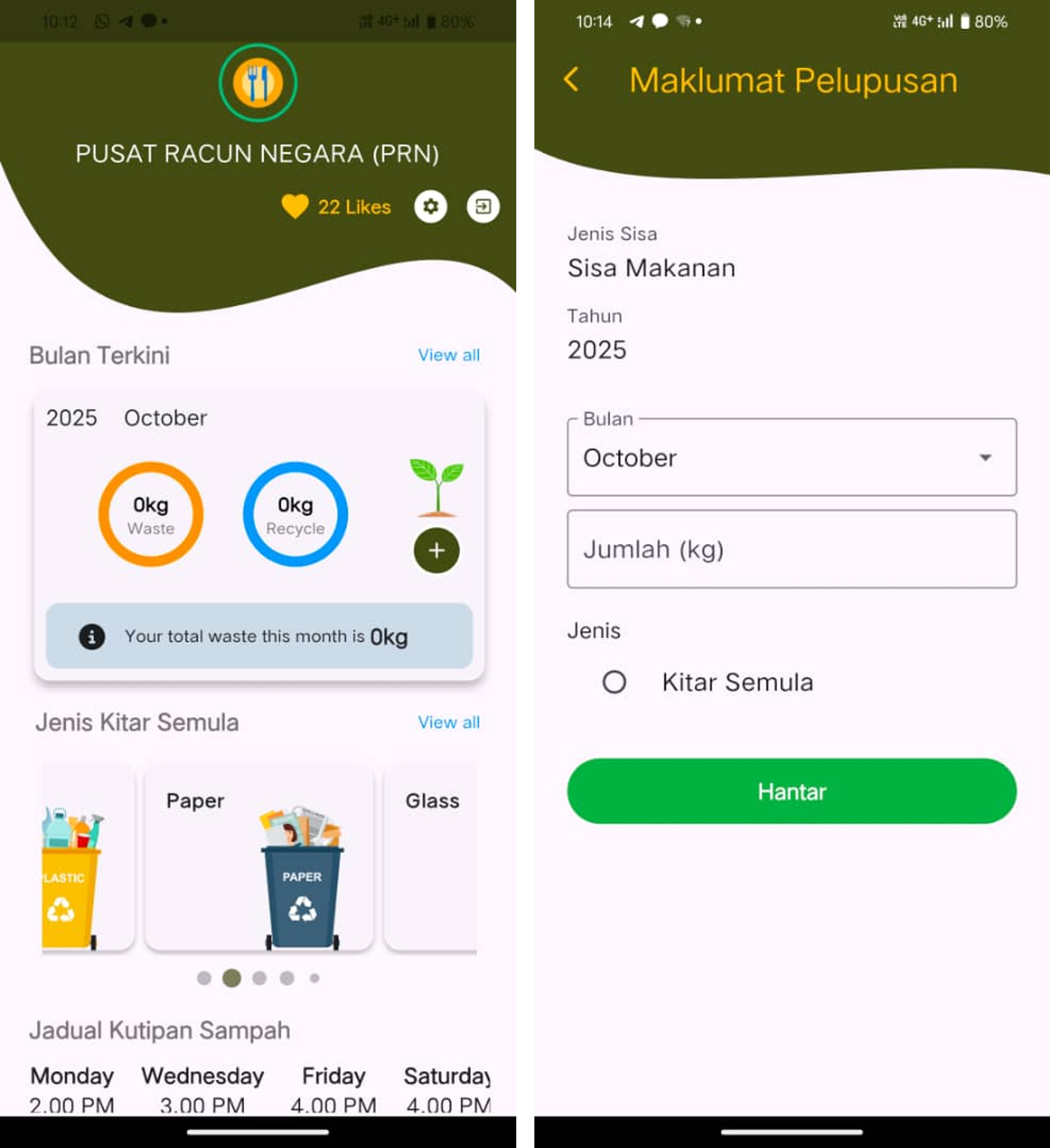
Universiti Sains Malaysia actively measures and monitors food waste generated across all cafeterias through its innovative USM Green Pulse system. This real-time sustainability tracking platform enables the whole university community to participate in reducing environmental impact by collecting, analysing, and reporting waste data with accuracy and transparency.
The USM Green Pulse system provides a comprehensive approach to sustainability management by focusing on food waste reduction, recycling, and resource optimisation. It collects real-time data from cafeterias and departments across all USM campuses, ensuring whole university coverage in food waste measurement and reporting. Data are recorded in kilograms per day and per year, while the system’s user-friendly interface allows staff and students to input data, generate analytical reports, and identify trends that enhance decision-making and drive continuous improvement in campus sustainability strategies.
Based on 2024 data (refer chart below), food waste measurements were recorded daily across major cafeterias on the main campus, including Saujana, Restu, Tekun, Indah Kembara, Aman, Damai, Bakti, Fajar Harapan, and Cahaya Gemilang. The total daily food waste generated from these cafeterias amounts to 16.2 kilograms average per day, equivalent to approximately 5,924 kilograms (5.92 tonnes) per year.
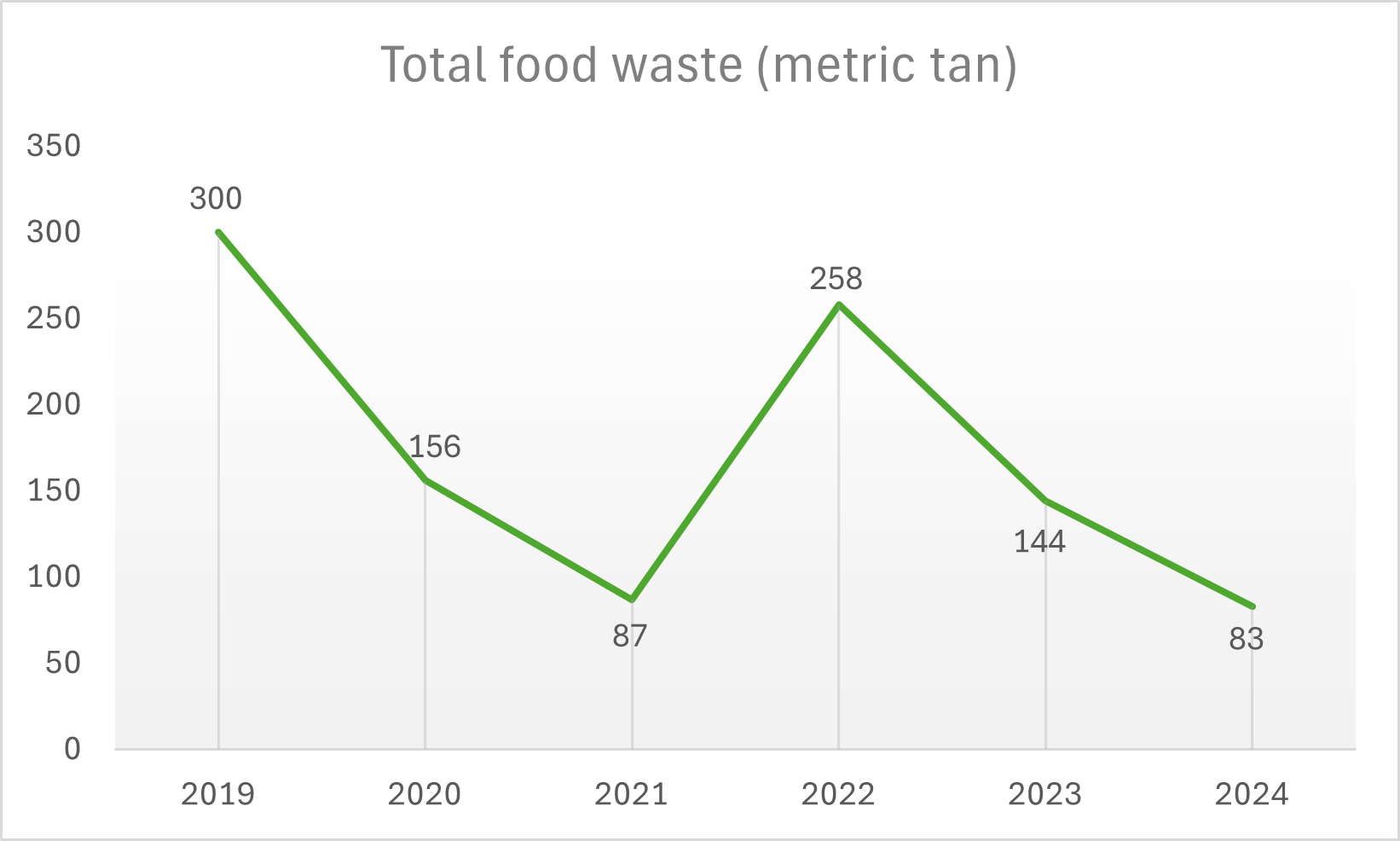
By systematically measuring food waste through the Green Pulse system, USM ensures whole university participation in accurate data collection that informs waste reduction initiatives, improves operational efficiency, and promotes sustainable dining practices. This initiative reflects USM’s proactive commitment to environmental stewardship and reinforces its leadership in advancing sustainable campus management.

-
Hazardous Waste
-
Sustainable Procurement
Policy on Ethical Sourcing of Food and Supplies
Universiti Sains Malaysia has an established policy framework that promotes ethical sourcing of food and supplies through the implementation of the USM Green Procurement Policy (Revised 2025) (pp.1-3) and the USM Sustainability Policy (Revised 2025) (pp.4-6). Together, these policies ensure that all procurement and supply activities align with principles of environmental stewardship, fair trade, and social responsibility.
The USM Green Procurement Policy mandates that all goods, services, and works procured by the university integrate environmental and social sustainability criteria. Under Section B: Scope, the policy applies to all procurement activities across USM, requiring suppliers and service providers to comply with sustainable and ethical practices. Section D: Policy Statement outlines the university’s commitment to selecting products and services that minimise environmental impact while achieving value for money, and Section E: Implementation Guidelines emphasises the procurement of ISO 14001-certified, recyclable, and responsibly sourced products.
Complementing this, the USM Sustainability Policy reinforces USM’s institutional commitment to responsible production and consumption under Section 6.7: Production and Consumption (SDG 12). The policy promotes ethical and sustainable resource use, equitable supply chain practices, and environmentally conscious purchasing decisions. These principles guide USM in sourcing food and supplies that are sustainable, ethically produced, and socially responsible.
Through these combined policies, USM ensures that ethical sourcing is embedded within its procurement framework, supporting environmentally responsible purchasing, reducing waste generation, and promoting sustainable production systems in line with SDG 12.
Policy on Disposable Items Extended to Outsourced Services
Universiti Sains Malaysia ensures that its policy on disposable items extends to all outsourced services through the implementation of the USM Green Procurement Policy (Revised 2025) (pp.1–3). The policy requires all service providers engaged with the university, including facility management, cleaning, catering, and maintenance contractors, to adopt environmentally responsible practices that reduce waste generation and minimise the use of single-use materials. The policy remains valid and enforced in 2024 under the Bursary Department’s sustainability governance framework.
Under Section B: Scope, the policy applies to all procurement activities related to supplies and services, including those delivered by external parties. Section D: Policy Statement emphasises sustainable procurement management by mandating that all outsourced services follow environmental and social standards. Section E: Implementation Guidelines further specifies that service providers must plan and deliver operations that consider environmental impact, comply with health and safety requirements, and prioritise the use of eco-friendly materials and reusable products.
Through this policy, USM ensures that the management of disposable items and sustainable practices extend across all outsourced services, reinforcing the university’s commitment to responsible consumption and environmental stewardship in line with SDG 12.
Minimisation Policies Extended to Suppliers and the Supply Chain
Universiti Sains Malaysia ensures that its minimisation policies extend to all suppliers and the supply chain through the enforcement of the USM Green Procurement Policy (Revised 2025) (pp.1–3). This policy mandates that all vendors, suppliers, and contractors involved in the supply of goods, materials, and equipment comply with sustainability standards that minimise disposable materials and promote the use of environmentally friendly products. The policy remains valid and enforced in 2024 under the Bursary Department’s sustainability governance framework.
Under Section B: Scope, the policy explicitly applies to all procurement processes, both internal and external, requiring suppliers to consider environmental and social factors throughout the supply chain. Section D: Policy Statement highlights the prioritisation of eco-certified, recyclable, and resource-efficient products. Section E: Implementation Guidelines outlines that suppliers must provide materials that are recyclable or reusable, use minimal or biodegradable packaging, and demonstrate compliance with environmental management standards such as ISO 14001.
By extending its waste minimisation principles to suppliers, USM strengthens its green procurement framework and ensures that sustainable practices are embedded across the entire supply chain. This commitment supports national and institutional efforts toward achieving SDG 12 and advancing a circular, low-waste economy.


BUILT ENVIRONMENT
In USM, the built environment emphasizes eco-friendly construction, energy-efficient facilities, and green spaces, fostering a sustainable and conducive campus atmosphere.

WATER
USM prioritizes responsible water use and conservation. We employ water-saving technologies and promote conservation practices, engaging the campus community through education and awareness campaigns.

WASTE
USM emphasizes waste minimization and recycling. Our efforts include recycling facilities, awareness campaigns, and collaborations for proper waste management.

ENERGY
USM prioritizes energy sustainability through efficiency and renewable sources. As part of our effort to reduce carbon emissions, we adopt energy-saving tech, lighting, and solar panels.

CLIMATE ACTION
USM is dedicated to climate change mitigation and adaptation. We integrate climate topics into our curriculum, conduct research, and organize awareness campaigns, seminars, and workshops.

HEALTH & WELLBEING
USM prioritizes sustainability through health and well-being initiatives by promoting physical and mental health, offering recreational facilities, and fostering a holistic and sustainable campus community.

BIODIVERSITY & ECOSYSTEM
USM emphasizes biodiversity conservation and ecosystem management in conducting research, collaborating with stakeholders, integrating biodiversity education, and practicing sustainable land use.