


-
固体废弃物
Waste Tracking Across the Whole University
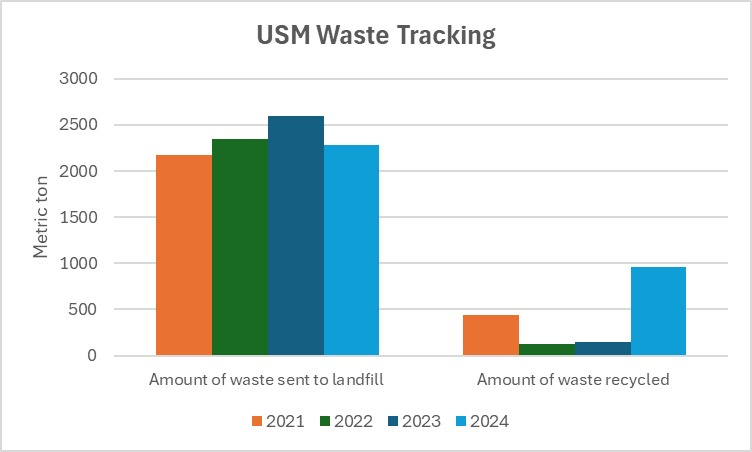
Universiti Sains Malaysia measures the amount of waste generated and recycled across the whole university. Waste generation and recycling performance are tracked annually for all campuses and operational units, supporting SDG 12: Responsible Consumption and Production.
In 2024, 29 percent of total waste across the whole university was recycled, while 71 percent was sent to landfill, marking a significant improvement compared to previous years. The amount of waste recycled increased sharply from 143 to 955 metric tons, while landfill waste was reduced from 2,595 to 2,285 metric tons.
These achievements highlight the success of USM’s Green Office and Green Desasiswa Programme and the campus-wide waste segregation initiatives. Collectively, these efforts demonstrate that USM is progressing toward its vision of a circular and zero-waste campus through systematic waste tracking and responsible waste management across the whole university.
Please refer below for the graph of measurement.
废弃物处理政策
理大已实施一套系统化的废弃物处置政策,旨在通过源头分类减少对垃圾填埋的依赖,并鼓励回收利用。该政策涵盖校园内各类废弃物(如建筑废料、园林废弃物及季节性废弃物)的收集、运输及处置的具体流程。受委托的承包公司需记录并追踪废弃物的收集情况,确保符合既定标准,并按时从指定地点清理废弃物。
为了符合可持续废弃物管理目标,理大要求将废物分为可回收和不可回收类别,以更有效地衡量被转移出垃圾填埋场的废弃物数量。此举不仅包括公众教育、社区参与,还加强了废弃物分类实践的执行,以营造更清洁的校园环境,同时通过提升回收利用率来延长垃圾填埋场的使用寿命。这一全面举措体现了理大对减少环境影响和推动可持续发展的坚定承诺,并严格遵循其废弃物管理政策的相关指导方针。
一次性塑料禁令
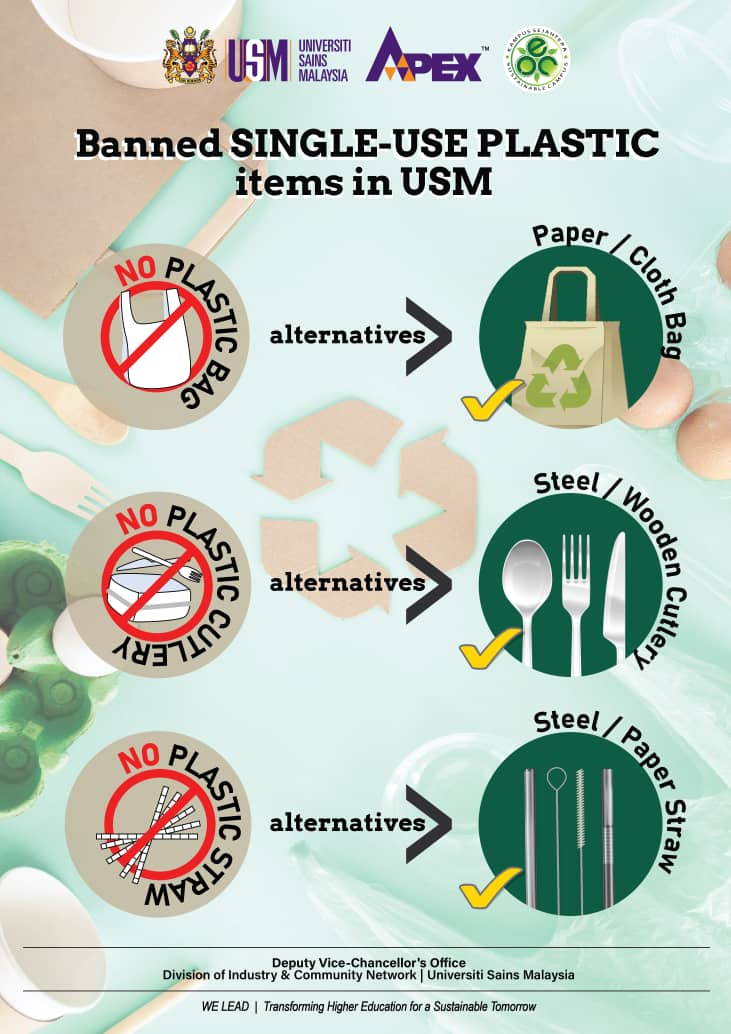
理大已采取果断措施减少校园内一次性塑料的使用,并在《2024年理大可持续发展政策》中明确规定了这一举措,其中包括禁止在校园内的食堂和餐饮场所使用塑料吸管、塑料袋和一次性塑料餐具。大学鼓励使用可重复使用的替代品,如纸质/金属吸管、布袋和环保餐具,以推动更可持续的校园环境。
USM Action Plan to Reduce Plastic Waste on Campus
Universiti Sains Malaysia (USM) has established a comprehensive Action Plan to Reduce Plastic Waste that aligns with its institutional sustainability strategy and commitment to environmental health. The plan, coordinated by the Division of Industry and Community Network (DICN) under the Deputy Vice-Chancellor’s Office, aims to progressively eliminate single-use plastics across all campuses by 2030, with phased implementation beginning in 2024.
The plan is anchored in USM’s Strategic Objective 1: Strengthen Sustainable Water and Waste Practices for Environmental and Community Health, which sets measurable targets for waste reduction and plastic elimination. The action plan initiatives include the implementation of a Zero-Waste Campus Framework, campus-wide awareness campaigns, and community engagement programmes to promote behavioural change. The short-term (2026) target specifies that at least 80% of the main campus will be designated as plastic-free, expanding to 100% across all campuses by 2030.
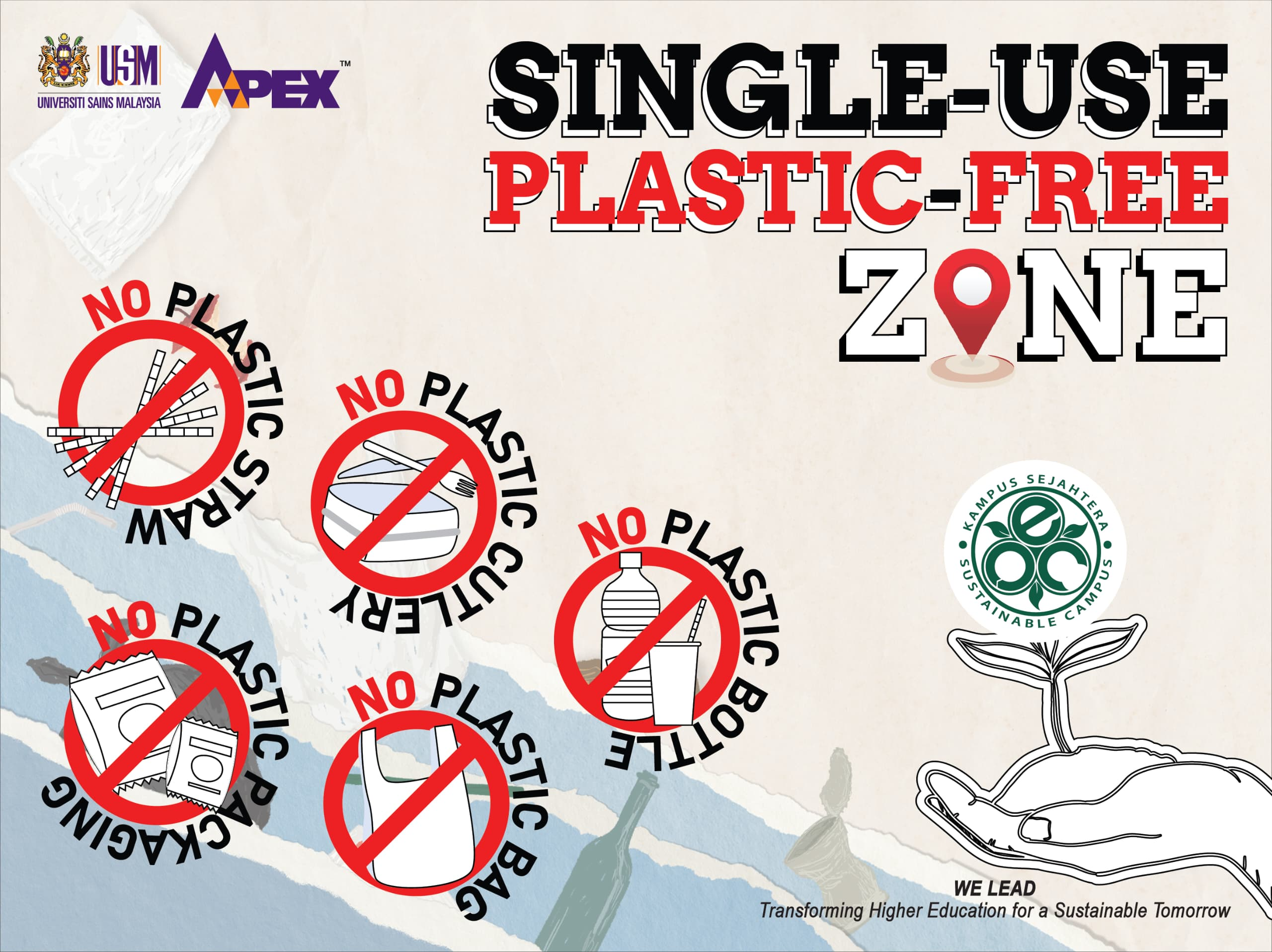
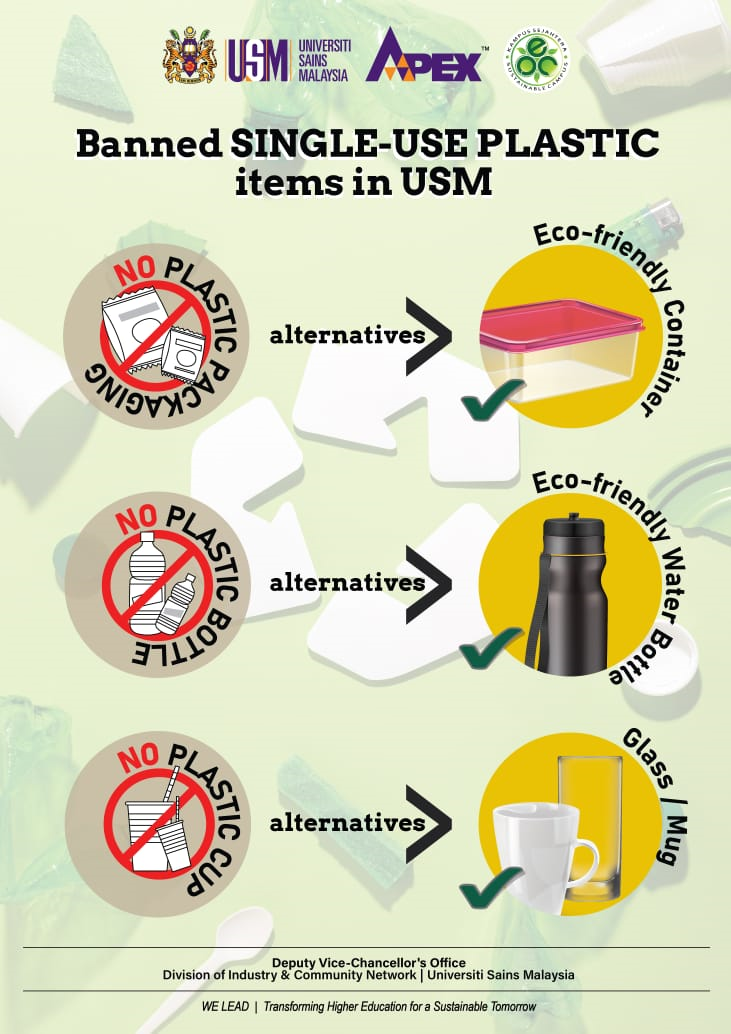
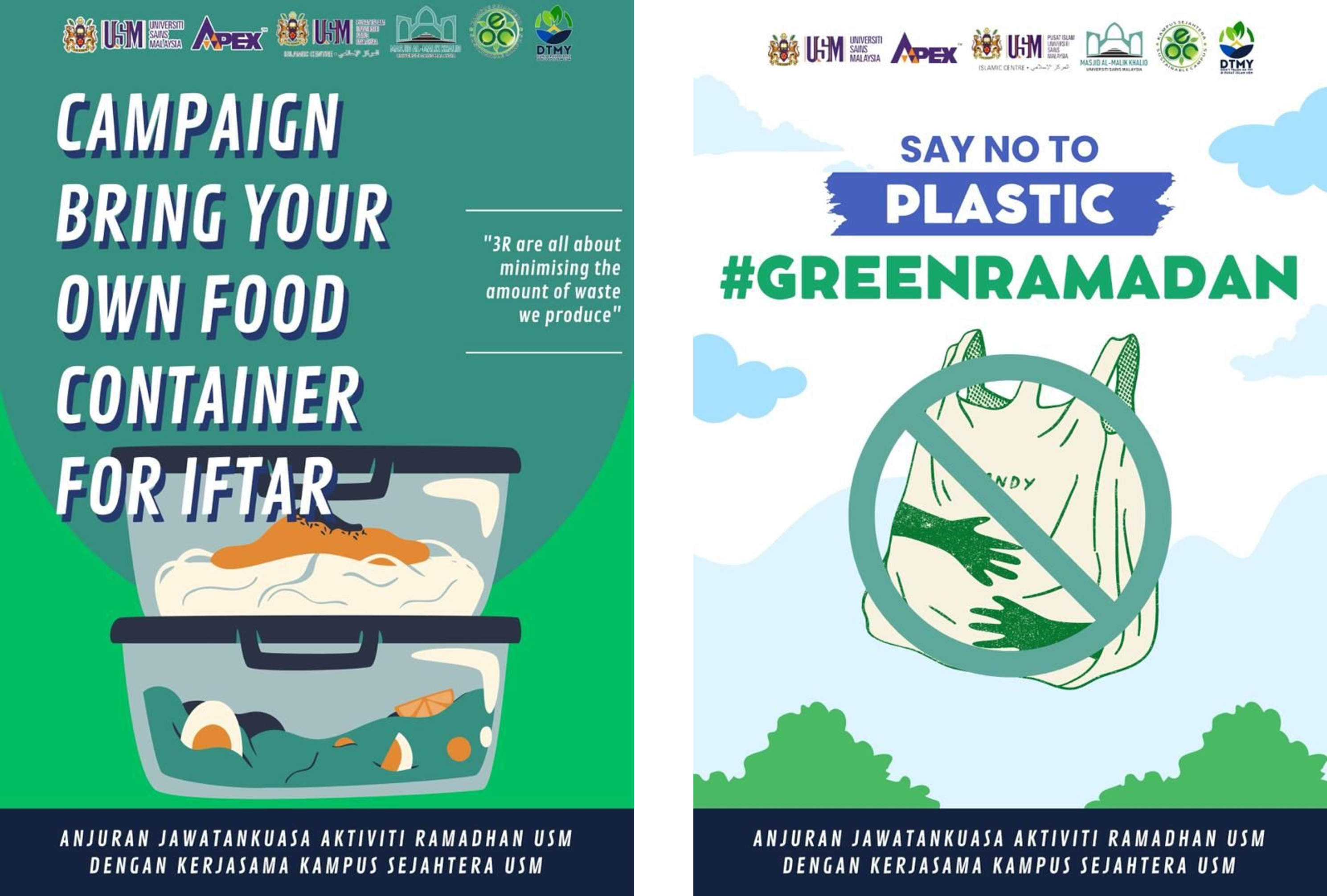
To reinforce these goals, USM has launched visible “Single-Use Plastic-Free Zone” campaigns and posters that ban plastic bags, bottles, cups, cutlery, and straws while promoting sustainable alternatives such as reusable steel or wooden utensils, glass mugs, and eco-friendly containers. Initiatives such as “Say No to Plastic – #GreenRamadan” and “Bring Your Own Food Container for Iftar” highlight community participation in reducing single-use plastic consumption during university events and daily operations.
Implementation of this action plan is supported by continuous monitoring and reporting through USM’s sustainability office. Progress indicators include waste diversion rates, percentage of plastic-free zones, and the number of awareness programmes held annually. Through this structured and measurable approach, USM ensures that its action plan to reduce plastic waste is both operational and impactful, fostering a culture of responsibility and sustainability across the university community.

-
食物浪费
自2019年以来,马来西亚理科大学(理大)在主校区、工程校区和医学校区,积极推动全校食堂的食物浪费测量与监测工作。每年,理大都会开展详尽的调查,收集各食堂的食物浪费数据,并将整理后的数据发布在大学官方网站上。
2020年,理大推出了一项计划,鼓励将食物残渣回收并制成堆肥,一些食堂已成功实施这可持续实践,并取得了良好成效。从大学食物浪费追踪系统生成的图表可以看出,此举展现了 理大在推动可持续文化方面的不懈努力,积极影响着教职员工与学生群体。这项计划只是 理大未来众多可持续发展举措中的一部分,彰显了大学在环境保护与可持续发展领域的坚定承诺。
理大积极倡导理性饮食习惯,强调减少食物浪费的重要性,鼓励校园社区成员作出更加审慎的饮食选择。此外,大学还为食堂经营者、学生和教职员工举办了一场专题讲座,重点介绍食品制作、消费和废弃物管理方面的可持续实践。

-
有害废弃物
马来西亚理科大学(理大)制定了专门的政策和完善的程序来处理和管理有害废弃物,并遵循《2005年环境质量(受管制废弃物)条例》。该政策以前名为“受管制废弃物管理政策”(Polisi Pengurusan Buangan Terjadual)。该政策已获大学职业安全与健康单位委员会(JKKPU)批准,涵盖废弃物处置管理的多个关键方面。
理大采取措施确保有害物质,特别是受管制废弃物的安全和可持续处理。这些废弃物包括化学实验废弃物、未使用或过期的化学品以及意外化学泄漏。该政策规定了以下管理措施:
- 安全处理与存储:受管制废弃物从产生到处置均按照系统化管理,由大学内各相关责任中心进行妥善处理。
- 风险评估与应急程序:理大进行风险评估并制定安全作业程序,其中包括针对泄漏或意外释放的应急响应规范。
- 专项培训:负责处理受管制废弃物的工作人员需定期接受专业培训,以确保安全管理有害物质。
- 持牌处理设施:废弃物的处置由持有环境局(JAS)发出执照的承包商负责,包括收集、运输和处理有害物质。
- 文件记录与存档:根据法规要求,全面记录有害废弃物的管理情况。
这些活动的详细程序已记录在《有害废弃物处置与管理程序》中,理大的教职员和学生可通过职业安全与健康单位
(UKKP)网站获取,以确保管理透明度并符合国家环境标准。
-
Sustainable Procurement
Policy on Ethical Sourcing of Food and Supplies
Universiti Sains Malaysia has an established policy framework that promotes ethical sourcing of food and supplies through the implementation of the USM Green Procurement Policy (Revised 2025) (pp.1-3) and the USM Sustainability Policy (Revised 2025) (pp.4-6). Together, these policies ensure that all procurement and supply activities align with principles of environmental stewardship, fair trade, and social responsibility.
The USM Green Procurement Policy mandates that all goods, services, and works procured by the university integrate environmental and social sustainability criteria. Under Section B: Scope, the policy applies to all procurement activities across USM, requiring suppliers and service providers to comply with sustainable and ethical practices. Section D: Policy Statement outlines the university’s commitment to selecting products and services that minimise environmental impact while achieving value for money, and Section E: Implementation Guidelines emphasises the procurement of ISO 14001-certified, recyclable, and responsibly sourced products.
Complementing this, the USM Sustainability Policy reinforces USM’s institutional commitment to responsible production and consumption under Section 6.7: Production and Consumption (SDG 12). The policy promotes ethical and sustainable resource use, equitable supply chain practices, and environmentally conscious purchasing decisions. These principles guide USM in sourcing food and supplies that are sustainable, ethically produced, and socially responsible.
Through these combined policies, USM ensures that ethical sourcing is embedded within its procurement framework, supporting environmentally responsible purchasing, reducing waste generation, and promoting sustainable production systems in line with SDG 12.
Policy on Disposable Items Extended to Outsourced Services
Universiti Sains Malaysia ensures that its policy on disposable items extends to all outsourced services through the implementation of the USM Green Procurement Policy (Revised 2025) (pp.1–3). The policy requires all service providers engaged with the university, including facility management, cleaning, catering, and maintenance contractors, to adopt environmentally responsible practices that reduce waste generation and minimise the use of single-use materials. The policy remains valid and enforced in 2024 under the Bursary Department’s sustainability governance framework.
Under Section B: Scope, the policy applies to all procurement activities related to supplies and services, including those delivered by external parties. Section D: Policy Statement emphasises sustainable procurement management by mandating that all outsourced services follow environmental and social standards. Section E: Implementation Guidelines further specifies that service providers must plan and deliver operations that consider environmental impact, comply with health and safety requirements, and prioritise the use of eco-friendly materials and reusable products.
Through this policy, USM ensures that the management of disposable items and sustainable practices extend across all outsourced services, reinforcing the university’s commitment to responsible consumption and environmental stewardship in line with SDG 12.
Minimisation Policies Extended to Suppliers and the Supply Chain
Universiti Sains Malaysia ensures that its minimisation policies extend to all suppliers and the supply chain through the enforcement of the USM Green Procurement Policy (Revised 2025) (pp.1–3). This policy mandates that all vendors, suppliers, and contractors involved in the supply of goods, materials, and equipment comply with sustainability standards that minimise disposable materials and promote the use of environmentally friendly products. The policy remains valid and enforced in 2024 under the Bursary Department’s sustainability governance framework.
Under Section B: Scope, the policy explicitly applies to all procurement processes, both internal and external, requiring suppliers to consider environmental and social factors throughout the supply chain. Section D: Policy Statement highlights the prioritisation of eco-certified, recyclable, and resource-efficient products. Section E: Implementation Guidelines outlines that suppliers must provide materials that are recyclable or reusable, use minimal or biodegradable packaging, and demonstrate compliance with environmental management standards such as ISO 14001.
By extending its waste minimisation principles to suppliers, USM strengthens its green procurement framework and ensures that sustainable practices are embedded across the entire supply chain. This commitment supports national and institutional efforts toward achieving SDG 12 and advancing a circular, low-waste economy.


建成环境
我们的使命是通过创新实践和解决方案推动建成环境的可持续发展,应对关键挑战,并以可持续发展目标作为指导原则.

水资源
在校园内培育负责任的水资源使用和节水实践是我们实现 2030 年可持续发展目标的承诺。

废弃物
通过集体努力和持续改进,我们的使命是减少废弃物、推动回收利用,并打造一个践行可持续发展理念的校园。

能源
通过这些举措,理大确立了自己作为可持续发展领导者的地位,提供可行的模型来指导政策和决策。通过整合研究、教育和倡导,理大支持推动全球范围内可持续解决方案的清洁能源政策。

气候变化
在理大,我们坚定致力于打造碳中和大学。我们的可持续发展承诺涵盖碳排放的三个关键领域——范围1、范围2和范围3,并通过持续努力最大限度地减少对环境的影响。

健康与身心平和
我们尽力通过提供卓越的教育、促进前沿研究以及促进社区参与健康与身心平和,帮助个人过上更健康的生活。

生物多样性与生态系统
我们的使命是成为地球的守护者,致力于通过研究、教育、社区参与和可持续实践来保护生物多样性和生态系统。