


-
Water Use and Efficiency
Whole University Water Consumption Tracking
Universiti Sains Malaysia is committed to responsible and sustainable water management across the whole university, encompassing all campuses, facilities, and operations. The university measures the total volume of water used in the university that is taken from mains supply, desalinated, or extracted from rivers, lakes, or aquifers to ensure efficient resource utilization, minimize wastage, and support long-term sustainability goals.
USM’s water supply is derived from three primary sources: mains-supplied water, desalinated water, and extracted water. Water from the mains supply is carefully managed to ensure optimal usage and reduce wastage throughout academic, residential, and administrative areas. The desalination system purifies brackish and seawater through electrodialysis and reverse osmosis processes, supported by treatment stages including flocculation, oxygenation, sedimentation, and storage. This system provides potable water while reducing pressure on natural freshwater sources.
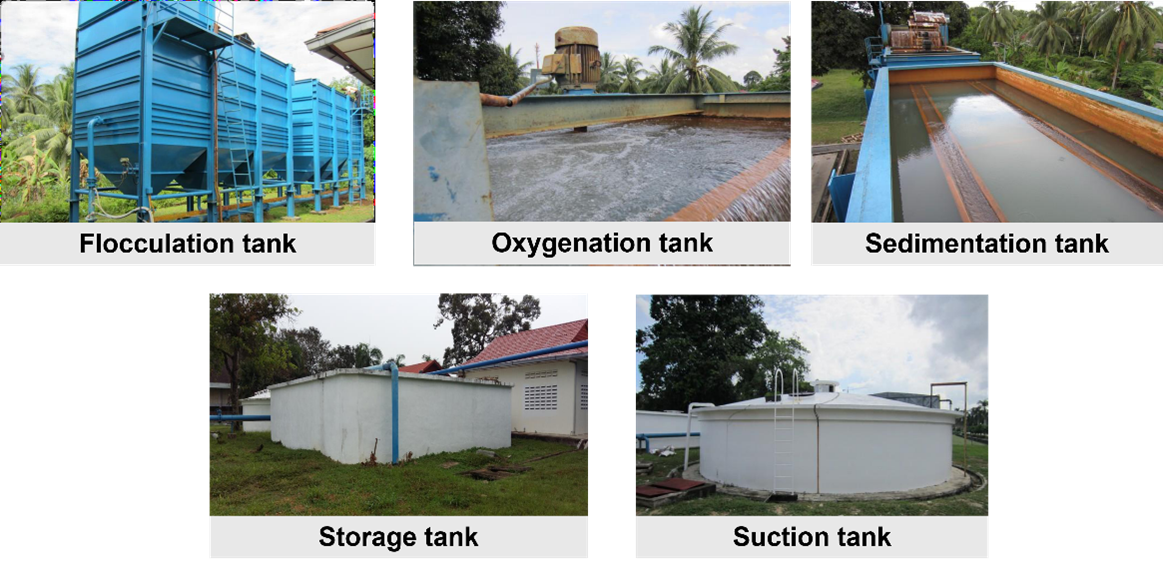
In addition, USM implements sustainable water utilization practices through extracted water systems, which harvest rainwater, stormwater, and groundwater for non-potable purposes. The stormwater pond harvesting system within the BIOECODS framework supplies water for laboratory use, hydraulic testing, and landscape irrigation. The interconnected wetpond, detention pond, and recreational pond have a combined capacity exceeding 33,000 m³, supporting extensive reuse across campus. Rainwater harvesting tanks are used for irrigation, car washing, and toilet flushing, while tube wells supplement non-potable supply for sanitation facilities.
Through this integrated tracking and measurement system, USM ensures that the whole university’s water consumption is systematically recorded and analysed. These data inform water conservation strategies, operational planning, and policy decisions aimed at improving efficiency and safeguarding water resources. USM’s comprehensive monitoring framework demonstrates a proactive approach to sustainable water management that aligns with national and global goals for environmental stewardship.
Water-Conscious Building Standards at Universiti Sains Malaysia
Universiti Sains Malaysia integrates sustainable water management and efficiency principles into all campus infrastructure through its Water-Conscious Building Standards, guided by the Dasar Pengurusan Fasiliti (DPF) 2022, under the Facilities Development & Management Department (JPPF). This institutional policy establishes comprehensive standards to ensure that building construction, maintenance, and operation practices prioritise sustainable water use, pollution prevention, and infrastructure resilience in line with SDG 6: Clean Water and Sanitation.
The DPF provides clear directives for efficient facility management, including the installation of water-saving technologies, preventive maintenance of clean water systems, and the application of sustainable design principles. These standards ensure that all campus facilities minimise water wastage, support effective monitoring, and operate within sustainable consumption limits.
In 2024, USM reinforced these standards through several major initiatives under the JPPF:
- Water Supply and Infrastructure Management – Installation of dual-flush cisterns, aerated taps, and flush valves; upgrading of the Engineering Campus water system with a 1.597-million-litre elevated tank and active leakage control programmes at the Main Campus.
- Rainwater Harvesting and Resource Utilisation – Rainwater systems at the Health Campus and the SmartDrops Project at the School of Humanities supply non-potable water for irrigation, car washing, and landscaping, reducing dependence on treated water.
- Water Reuse and Recycling – The Clinical Diagnostic Laboratory at PPUSMB reuses distilled and condensate water for reagent preparation and cleaning, saving approximately 300 litres monthly.
Through the implementation of these water-conscious standards, USM ensures that every campus building is designed and managed to optimise water efficiency and support environmental sustainability.
Water-conscious Planting at at Universiti Sains Malaysia
Universiti Sains Malaysia adopts water-conscious planting practices as part of its commitment to sustainable water resource management under the USM Sustainability Policy (Revised 2025, Section 6.1 – Clean Water and Sanitation, pp. 3). The policy promotes sustainable and integrated water management through water quantity and quality monitoring, water reuse, and the reduction of water consumption across all campuses.
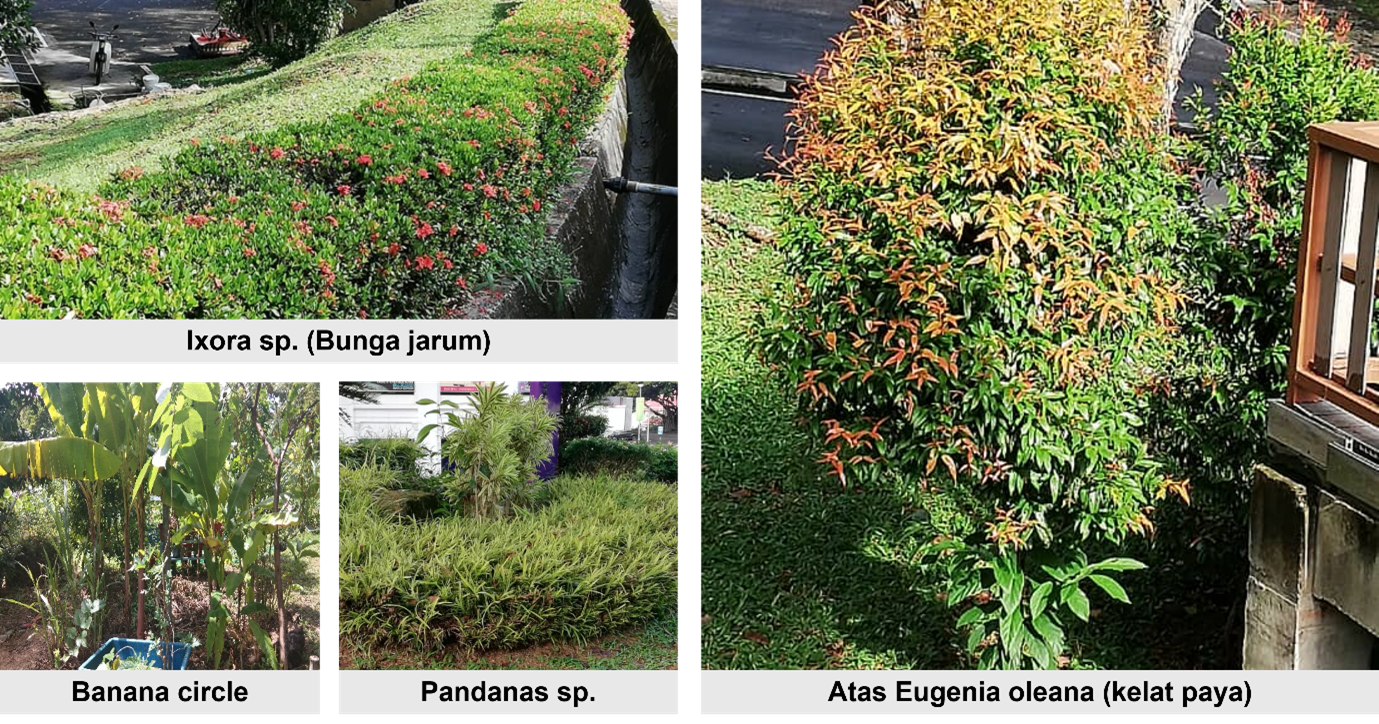
USM continues to plant landscapes to minimise water usage by incorporating drought-tolerant and native species such as Eugenia oleana (Kelat Paya), Ixora sp. (Bunga Jarum), and Pandanus sp.. These plants are well adapted to the local climate and require minimal irrigation, allowing the University to maintain green spaces while conserving water resources. The use of banana circles enables greywater and nutrients to be recycled on site, reducing the need for external water sources.
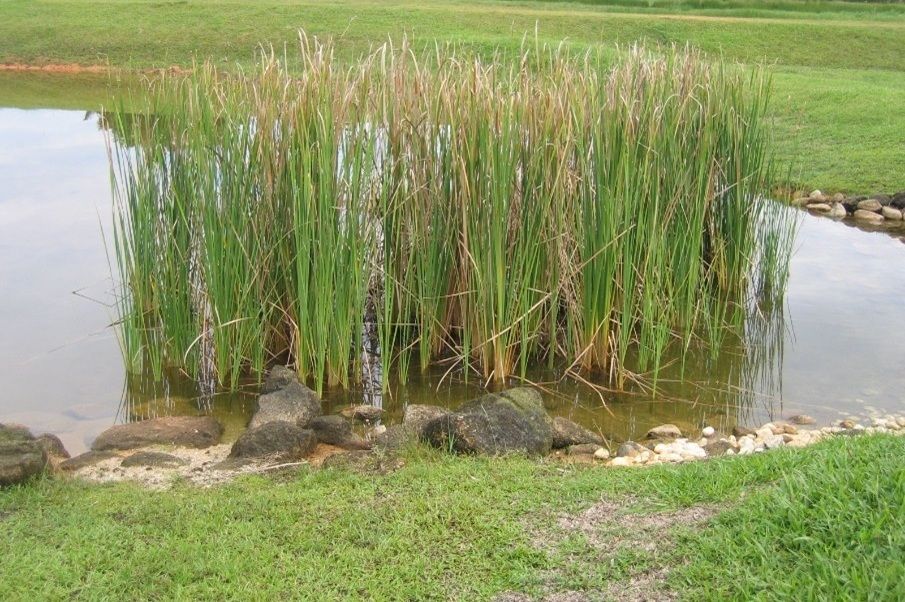
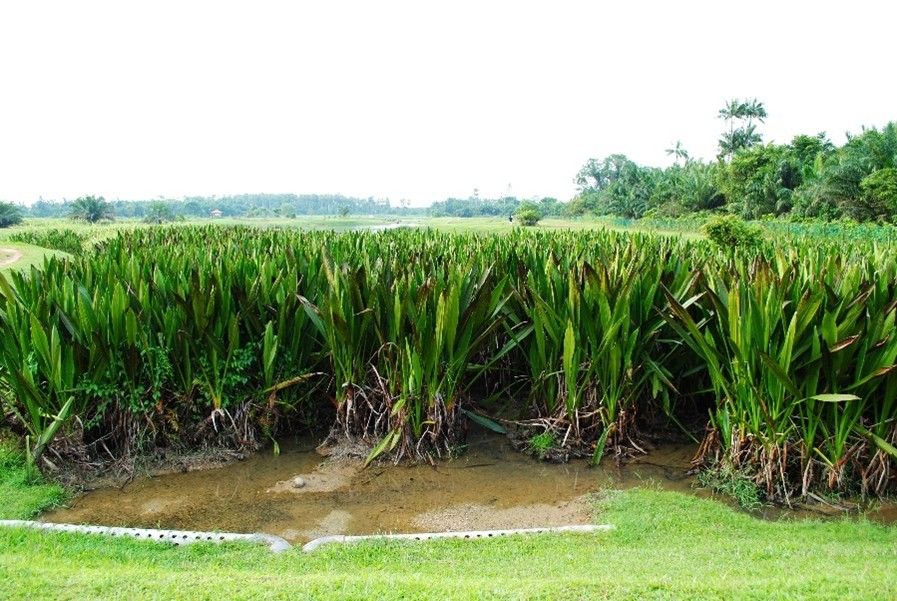
Composting, grass-cycling, and mulching, practiced under the Bukit TI Project by the School of Industrial Technology, help retain soil moisture and reduce evaporation. At the Engineering Campus, the River Engineering and Urban Drainage Research Centre (REDAC)River Engineering and Urban Drainage Research Centre (REDAC) applies phytoremediation ponds with native wetland plants such as Typha angustifolia and Hanguana malayana to naturally treat and reuse stormwater.
Through these integrated efforts, USM demonstrates a sustainable landscaping approach that conserves water, supports biodiversity, and promotes long-term environmental stewardship in line with SDG 6.
Water Reuse Policy at Universiti Sains Malaysia
Universiti Sains Malaysia demonstrates a strong institutional commitment to sustainable water management through its Sustainability Policy (2024), which outlines a clear framework to maximise water reuse across the university. The policy emphasises that integrated water resource management is essential to address future water scarcity and to ensure equitable access to clean water and sanitation for all campus users.
As stated in the USM Sustainability Policy (Revised 2025, pp. 3, Section 6.1: Clean Water & Sanitation [SDG 6]), the university acknowledges the urgency of rethinking water resource management in response to global and national challenges. The policy explicitly affirms USM’s commitment to maximising water reuse across the university, reducing water consumption on campus, and integrating sustainable water management practices throughout all facilities by 2030.
This policy direction is operationalised through several initiatives under the Facilities Development & Management Department (JPPF), including:
- Rainwater harvesting systems at the Engineering and Health Campuses for irrigation, toilet flushing, and car washing.
- Stormwater reuse through the BIOECODS system, which channels treated stormwater for laboratory and landscape use.
- Water recycling in laboratories, such as the Clinical Diagnostic Laboratory (PPUSMB), which reuses distilled and condensate water for non-critical applications.
Together, these actions reflect the direct implementation of USM’s water reuse policy, ensuring that sustainability principles are embedded in campus design, daily operations, and community practices. Through these measures, USM reinforces its position as a leader in sustainable water management and its commitment to achieving SDG 6: Clean Water and Sanitation.
Measuring Water Reuse Across Universiti Sains Malaysia
Universiti Sains Malaysia systematically measures the reuse of water across the university, ensuring that water recovery, storage, and reuse volumes are monitored and recorded for sustainability reporting and operational improvement. This approach supports efficient water management and aligns with the goals of SDG 6: Clean Water and Sanitation.
Across all campuses, water reuse is implemented through rainwater harvesting systems, stormwater recovery infrastructure, and laboratory-level recycling initiatives. Flow meters, data loggers, and automated sensors track the volumes of water reused for non-potable purposes such as toilet flushing, irrigation, and laboratory cleaning.
The table below summarises key measured water reuse volumes in 2024:
Location / Facility System / Source Measured Reuse Volume Primary Reuse Application Monitoring Method School of Civil Engineering, Engineering Campus Rainwater Harvesting Tank 2,800 litres (2.8 m³) per cycle Landscape irrigation, catfish pond maintenance Manual meter readings and refill tracking Health Campus (RWDP System) Dual Rainwater Storage Tanks 2 × 4,000 gallons (≈32,000 litres total) Toilet flushing, car washing, nursery irrigation Flow monitoring via tank-level indicators SmartDrops Project, Main Campus IoT-Enabled Rainwater Harvesting System 7,570 litres (tank capacity) Eco-garden and fishpond irrigation IoT sensors for real-time water data Clinical Diagnostic Laboratory (CDL), PPUSMB Reuse of Distilled and Condensate Water 10 litres/day (≈300 litres/month) Machine cleaning, buffer reagent preparation Laboratory usage logs Engineering Campus Hostels Water Data Logger System Continuous daily monitoring Sanitation and flushing systems Electronic data logger Sustainable Water Extraction Technologies on Campus
Universiti Sains Malaysia demonstrates its leadership in sustainable water management through the implementation of advanced water extraction technologies that support efficient water use, reuse, and environmental protection across all campuses. These technologies are designed to minimize reliance on treated water, reduce wastage, and promote sustainable use of natural resources in alignment with Sustainable Development Goal 6: Clean Water and Sanitation.
USM employs a combination of water sources and technologies, including mains supply, desalination systems, stormwater harvesting, rainwater harvesting tanks, and tube well extraction. Together, these systems ensure that water is extracted, treated, and reused responsibly to meet the needs of academic, residential, and operational facilities across the university.
The university’s desalination technologies utilize electrodialysis (ED) and reverse osmosis (RO) processes to purify brackish and seawater for potable use. These systems incorporate treatment stages such as flocculation, oxygenation, sedimentation, and storage, reducing dependence on freshwater resources and ensuring minimal environmental impact.
At the USM Engineering Campus, the Bio-Ecological Drainage System (BIOECODS) stands as the university’s flagship example of sustainable stormwater management and water extraction technologies. This integrated system captures and stores stormwater runoff in a series of interconnected ponds with a combined storage capacity of more than 30,000 cubic metres. The system applies a combination of constructed wetland technologies, ecological swales, and pump-driven circulation technologies that naturally filter and recycle water for reuse. Extracted stormwater is used for hydraulic research at the River Engineering and Urban Drainage Research Centre (REDAC) and for non-potable applications such as irrigation, gardening, and maintenance.
Through the integration of nature-based and engineered technologies, BIOECODS operates as a closed-loop water reuse system that minimizes wastage while supporting aquatic biodiversity. By demonstrating how stormwater can be extracted and reused through sustainable design, USM reduces the need for direct water extraction from rivers, lakes, or aquifers, promoting both operational sustainability and environmental conservation.
In addition, rainwater harvesting technologies are implemented across various campuses, including the School of Civil Engineering and the Health Campus. Collected rainwater is stored and reused for non-potable applications such as toilet flushing, vehicle washing, and landscape irrigation. Tube well extraction systems complement these efforts by providing water for maintenance and sanitation purposes, further supporting efficient water use across the university.
Collectively, these sustainable water extraction technologies demonstrate USM’s commitment to innovation, research, and environmental stewardship. By applying advanced extraction and reuse systems, the university not only enhances water security on campus but also serves as a model for sustainable water management in Malaysia and beyond.
-
Water Quality and Standards
USM Wastewater Treatment Process
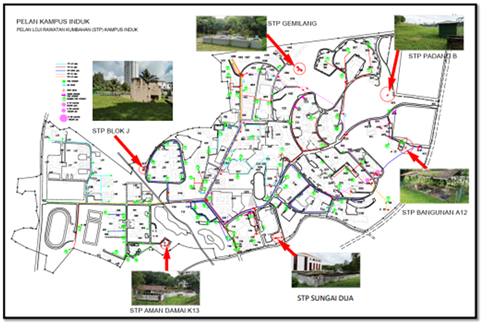
Universiti Sains Malaysia has a well-established process in place to treat wastewater, ensuring full compliance with Malaysia’s effluent discharge standards and supporting the university’s commitment to environmental protection and sustainable campus operations. The Wastewater Treatment Plant (Loji Rawatan Kumbahan) at the Main Campus systematically manages sewage from all campus buildings through a structured treatment process designed to prevent water pollution and protect local ecosystems.
The process begins with the flow of wastewater from all premises and buildings into the treatment plant via the central sewage pipe network. At the initial stage, a screening process removes large debris and non-biodegradable materials, such as plastics, to prevent blockages and protect downstream equipment. The wastewater then enters a settling tank, where sludge settles at the bottom and floating scum rises to the surface for removal.
Following sedimentation, the aeration tank facilitates biological treatment, allowing beneficial bacteria to decompose organic matter over a period of 18 to 24 hours. This process reduces biochemical oxygen demand (BOD) and enhances effluent quality. The treated water is then transferred to a clarifier tank, where any remaining suspended solids are removed. Separated sludge is redirected for safe disposal, while clarified effluent proceeds through a sand filtration unit for final polishing.
The treated effluent that meets the Malaysian Environmental Quality Regulations is then safely discharged into the existing drainage system. To ensure consistent performance and compliance, monthly testing of the final effluent is conducted by certified laboratories, verifying that all discharge parameters remain within permissible limits.
This structured wastewater treatment system demonstrates USM’s proactive approach to sustainable water management and its operational commitment to reducing pollution and safeguarding aquatic environments. Through continuous monitoring and process optimisation, the university ensures that its wastewater management practices contribute to both environmental stewardship and regulatory compliance.
Preventing Water System Pollution through BIOECODS at USM
Universiti Sains Malaysia has implemented the Bio-Ecological Drainage System (BIOECODS) as part of its comprehensive processes to prevent polluted water entering the water system, including pollution caused by accidents and incidents at the university. This innovative system represents an integrated approach to sustainable stormwater management that protects the campus’s hydrological balance while safeguarding surrounding ecosystems.
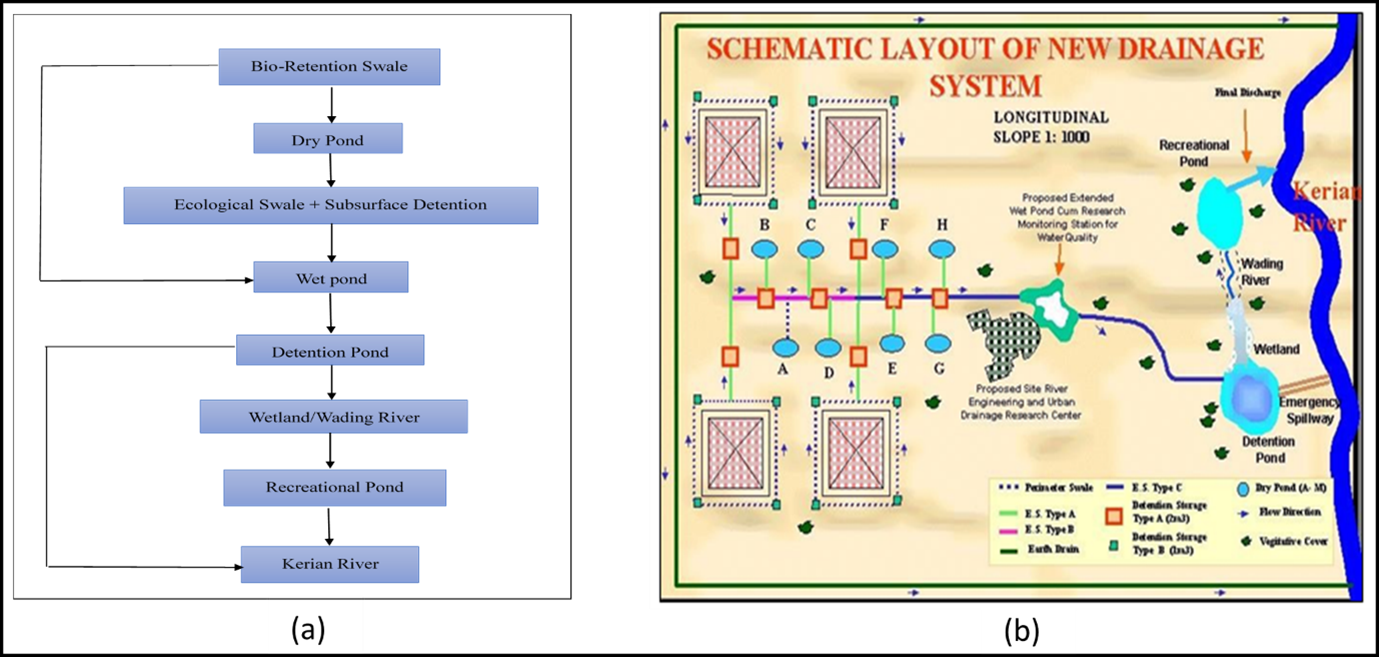
The BIOECODS framework functions by capturing, filtering, and treating stormwater at its source before it enters the main drainage network. It combines engineered and natural processes that slow down runoff, remove pollutants, and enhance infiltration, ensuring that water released from the campus meets high environmental quality standards.
Key elements of BIOECODS include stormwater management controls, which reduce the likelihood of contaminated runoff from roadways, laboratories, and car parks entering the natural waterways. Vegetated swales and constructed wetlands act as natural filtration systems that remove sediments, heavy metals, and organic pollutants. These green infrastructures not only trap contaminants but also promote biological degradation through plant and microbial activity, maintaining cleaner water throughout the system.
In the event of accidental spills or pollution incidents, the system’s design attenuates water flow to contain contaminants temporarily within the ponds, allowing sediments and pollutants to settle before discharge. The interconnected ponds, detention basins, and filtration channels provide hydraulic buffering that mitigates environmental impact during such occurrences.
BIOECODS is maintained and monitored regularly by the River Engineering and Urban Drainage Research Centre (REDAC) to ensure continuous functionality. Routine inspections, water-quality sampling, and sediment management are conducted to confirm compliance with environmental standards.
Through the BIOECODS system, USM demonstrates a proactive commitment to pollution prevention, sustainable water management, and ecosystem protection. This approach ensures that water leaving the campus is treated, filtered, and safe, reflecting the university’s dedication to environmental responsibility and long-term resource conservation.
Water Discharge Guidelines and Standards
Universiti Sains Malaysia (USM) has established a comprehensive framework to uphold water quality through the Bio-Ecological Drainage System (BIOECODS), a national pilot project implemented at the USM Engineering Campus in Penang since 2001. The system embodies the university’s commitment to maintaining the integrity of aquatic ecosystems by ensuring that all water discharges comply with recognised environmental standards.
The BIOECODS plan integrates sustainable engineering principles with ecological design to minimise the physical, chemical, and biological alterations of stormwater runoff before it enters natural waterways. The system follows the Urban Stormwater Management Manual for Malaysia (MSMA), which prescribes the “control-at-source” approach to manage both the quantity and quality of stormwater. This ensures that runoff is treated through a multi-stage natural filtration process using constructed wetlands, ecological swales, detention ponds, and wet ponds. These components collectively trap sediments, remove nutrients, and degrade organic matter, resulting in cleaner discharge water that protects aquatic habitats and downstream ecosystems.
Water quality at the final discharge points is monitored in accordance with the National Water Quality Standards (NWQS) for Malaysia. The BIOECODS system is designed to meet Class II A/B standards, ensuring that discharged water maintains safe levels of dissolved oxygen, total suspended solids, biochemical oxygen demand, and chemical oxygen demand. These standards safeguard both aquatic biodiversity and public health, ensuring that treated water is suitable for recreational use and ecosystem balance.
By integrating the MSMA and NWQS frameworks into its operations, USM has institutionalised clear water discharge guidelines and standards that prevent contamination, maintain biodiversity, and support sustainable watershed management. The success of BIOECODS as a national reference model reflects the university’s leadership in implementing environmentally responsible water management practices that align with SDG 6 (Clean Water and Sanitation) and SDG 15 (Life on Land).
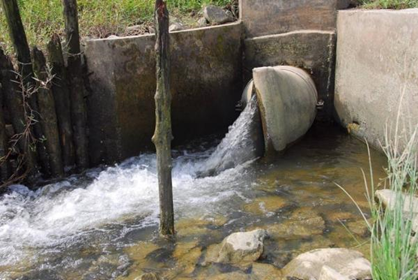
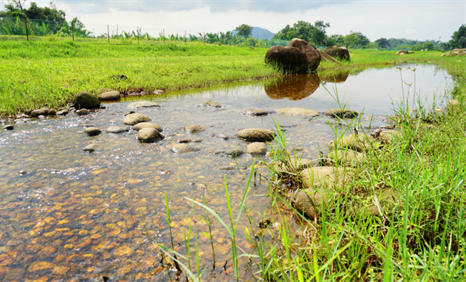
Pictures of BIOECODS
-
Water Awareness and Programs


PERSEKITARAN BINAAN
Di USM, persekitaran binaan menekankan pembinaan mesra alam, kemudahan cekap tenaga, dan ruang hijau, yang menyokong suasana kampus yang mampan dan kondusif.

AIR
USM mengutamakan penggunaan air secara bertanggungjawab dan pemuliharaan. Kami menggunakan teknologi penjimatan air dan menggalakkan amalan pemuliharaan.

SISA
USM menekankan pengurangan sisa dan kitar semula. Usaha kami merangkumi penyediaan kemudahan kitar semula, kempen kesedaran, serta kerjasama untuk pengurusan sisa yang betul.

TENAGA
USM mengutamakan kelestarian tenaga melalui kecekapan dan sumber boleh diperbaharui. Sebagai sebahagian daripada usaha mengurangkan pelepasan karbon, kami menggunakan teknologi penjimatan tenaga, pencahayaan cekap tenaga, dan panel solar.

TINDAKAN IKLIM
USM komited terhadap mitigasi dan adaptasi perubahan iklim. Kami mengintegrasikan topik berkaitan iklim dalam kurikulum, menjalankan penyelidikan, serta menganjurkan kempen kesedaran, seminar, dan bengkel.

KESIHATAN & KESEJAHTERAAN
USM mengutamakan kelestarian melalui inisiatif kesihatan dan kesejahteraan dengan mempromosikan kesihatan fizikal dan mental, menyediakan kemudahan rekreasi, serta membentuk komuniti kampus yang holistik dan mampan.

BIODIVERSITI & EKOSISTEM
USM menekankan pemuliharaan biodiversiti dan pengurusan ekosistem melalui pelaksanaan penyelidikan, kerjasama dengan pihak berkepentingan, integrasi pendidikan biodiversiti, serta amalan penggunaan tanah secara mampan.